
What Is Exhaustion?
ExhaustionDefinitionWhen a price extreme is reached but the aggressive volume that should be driving it is missing. Classic reversal signal — the move ran out of participants. is when a trend pushes to a new high or low but the volume that should be driving it simply isn't there. The bar makes the extreme — but the buyers (or sellers) who got it there have already gone home. The move is running on fumes.
On a footprint chartDefinitionA chart showing bid and ask volume at every price inside each candle. Reveals who is buying and selling., exhaustionDefinitionWhen a price extreme is reached but the aggressive volume that should be driving it is missing. Classic reversal signal — the move ran out of participants. has a very specific signature: the price extreme of the bar shows almost no aggressive volume on the side that pushed it there. Buyers ran the price up to a new high — and the highest few prices have a handful of contracts on the askDefinitionThe lowest price someone is currently willing to sell at. If you buy at market, this is what you pay.. That's it.
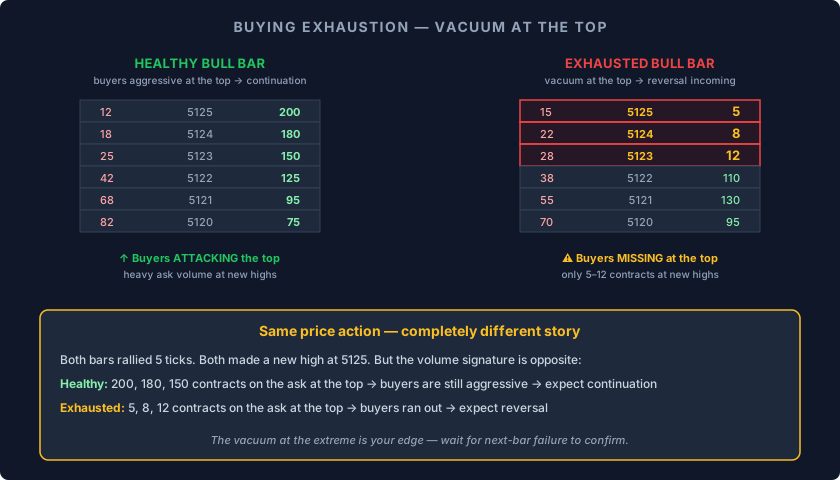
It is one of the most reliable reversal signals in order flow. When the move runs out of participants, the next move is almost always in the opposite direction.
The Classic Exhaustion Signature
Two ingredients:
- A new bar extreme — the bar makes a new high (for buying exhaustionDefinitionBar makes a new high but the top few prices have minimal ask volume. Buyers ran out — reversal lower likely.) or new low (for selling exhaustionDefinitionBar makes a new low but the bottom few prices have minimal bid volume. Sellers ran out — reversal higher likely.)
- Vacuum at the extreme — the few prices at the extreme have minimal volume on the aggressive side
Compare two bars that both rallied 10 ticks:
- Healthy bull bar: the top 3 prices show 200, 180, 150 contracts on the askDefinitionThe lowest price someone is currently willing to sell at. If you buy at market, this is what you pay. → buyers were aggressive all the way up
- Exhausted bull bar: the top 3 prices show 12, 8, 5 contracts on the askDefinitionThe lowest price someone is currently willing to sell at. If you buy at market, this is what you pay. → the rally was a vacuum, no real buying at the highs
Same price action. Completely different story underneath.
ExhaustionDefinitionWhen a price extreme is reached but the aggressive volume that should be driving it is missing. Classic reversal signal — the move ran out of participants. is the moment when the move stops being driven by buyers (or sellers) and starts being driven by the absence of the other side. As soon as that absence ends, the move reverses.
Buying Exhaustion at the High
When you see buying exhaustionDefinitionBar makes a new high but the top few prices have minimal ask volume. Buyers ran out — reversal lower likely., the implication is: the buyers who pushed price up are not at the top. Either they sold into the rally (took profit) or they were never there in the first place — price drifted up through thin offers.
What happens next is predictable. Sellers who were waiting see no buying pressure and start hitting bids. Without aggressive buyers to absorb them, price reverses fast.
Best context for buying exhaustionDefinitionBar makes a new high but the top few prices have minimal ask volume. Buyers ran out — reversal lower likely.:
- At a known resistance level (prior day high, weekly POCDefinitionPoint of Control — the price with the highest volume. Where the most trading happened., session VAHDefinitionValue Area High — the upper boundary of the zone where 70% of volume traded. Acts as resistance.)
- After a multi-bar rally — the more extended the move, the more meaningful the exhaustionDefinitionWhen a price extreme is reached but the aggressive volume that should be driving it is missing. Classic reversal signal — the move ran out of participants.
- During the back half of the session when momentum should be strongest
Selling Exhaustion at the Low
The mirror image. The bar makes a new low but the bottom prices have almost no bidDefinitionThe highest price someone is currently willing to pay to buy. If you sell at market, this is what you get.-side volume. Sellers ran out before the buyers showed up.
This is what a flush bottom looks like in real time: panic sellers exit early in the bar, then the bar drifts down through air with nobody left to sell. The next move up is often violent because shorts have to cover and there are no offers in the way.
Exhaustion vs Continuation
Telling exhaustionDefinitionWhen a price extreme is reached but the aggressive volume that should be driving it is missing. Classic reversal signal — the move ran out of participants. apart from a healthy trending bar is the entire skill. The contrast:
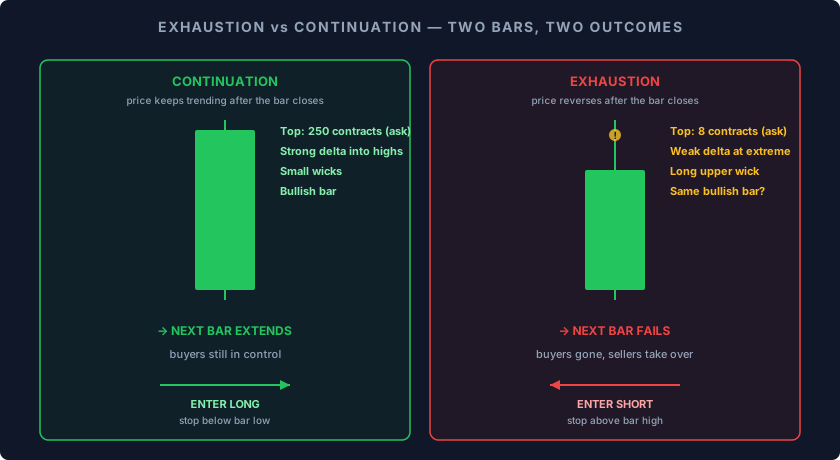
| Feature | Healthy Bar | Exhausted Bar | |---|---|---| | Volume at extreme | Heavy on aggressive side | Almost none on aggressive side | | Delta at extreme | Strongly one-sided | Flat or contradictory | | Wick / tail | Small or absent | Often large | | Continuation odds | High | Low | | Reversal odds | Low | High |
If a bar makes a new high and the top 3 prices each have 100+ contracts on the askDefinitionThe lowest price someone is currently willing to sell at. If you buy at market, this is what you pay., that's continuation — buyers are still aggressive. If the same bar makes a new high but the top 3 prices have under 20 contracts on the ask, that's exhaustionDefinitionWhen a price extreme is reached but the aggressive volume that should be driving it is missing. Classic reversal signal — the move ran out of participants. — the move has no fuel.
How to Confirm Exhaustion
Don't trade on the first exhaustionDefinitionWhen a price extreme is reached but the aggressive volume that should be driving it is missing. Classic reversal signal — the move ran out of participants. signal alone. Confirm with:
- Delta divergenceDefinitionWhen price and cumulative delta disagree at swing extremes. Order flow weakening before price confirms — early-warning signal. — if the bar made a new price high but bar deltaDefinitionAsk volume minus bid volume. Positive = more buying. Negative = more selling. Shows who is more aggressive. is lower than the previous bar's delta, the divergence supports exhaustionDefinitionWhen a price extreme is reached but the aggressive volume that should be driving it is missing. Classic reversal signal — the move ran out of participants.
- Cumulative deltaDefinitionRunning total of buying vs selling across the session. Shows who has been in control overall. — if cumulative delta is flat or falling while price made a new high, that's a second confirmation
- The next bar — exhaustionDefinitionWhen a price extreme is reached but the aggressive volume that should be driving it is missing. Classic reversal signal — the move ran out of participants. is most reliable when the next bar fails to follow through. A failed continuation bar after exhaustion is the entry signal.
- Context level — exhaustionDefinitionWhen a price extreme is reached but the aggressive volume that should be driving it is missing. Classic reversal signal — the move ran out of participants. at random mid-range prices is noise. Exhaustion at a key level (PDHDefinitionPrior Day High — the highest price from yesterday's RTH session. A key level every trader watches., VAHDefinitionValue Area High — the upper boundary of the zone where 70% of volume traded. Acts as resistance., naked POCDefinitionPrior-session POCs that price never retested. Act as magnets — price tends to come back to them.) is signal.
Exhaustion + Absorption: The High-Probability Combo
ExhaustionDefinitionWhen a price extreme is reached but the aggressive volume that should be driving it is missing. Classic reversal signal — the move ran out of participants. is a "no buyers left" signal. AbsorptionDefinitionHeavy aggressive orders hit a level but price doesn't move — a large passive player is absorbing the flow. is a "passive sellers actively soaking up demand" signal. When you get both at the same level — exhaustion AT the high, then absorption defending the high on the next test — that is the highest-conviction reversal setup in order flow.
Sequence:
- Bar 1: makes a new high with exhaustionDefinitionWhen a price extreme is reached but the aggressive volume that should be driving it is missing. Classic reversal signal — the move ran out of participants. signature (vacuum at the top)
- Bar 2: tries to push to the same high or slightly above
- Bar 2 shows absorptionDefinitionHeavy aggressive orders hit a level but price doesn't move — a large passive player is absorbing the flow. — heavy sell volume hitting passive offers, but price doesn't break out
- Now you have confirmation that the high is being defended
Short with stop above the high. Target the next reference below.
Common Mistakes
- Trading every exhaustionDefinitionWhen a price extreme is reached but the aggressive volume that should be driving it is missing. Classic reversal signal — the move ran out of participants. — exhaustion in mid-range or against trend often fails. Combine with structure and key levels.
- Confusing thin volume with exhaustionDefinitionWhen a price extreme is reached but the aggressive volume that should be driving it is missing. Classic reversal signal — the move ran out of participants. — 4 PM ET sessions naturally have low volume. Real exhaustion happens during liquid hours when volume *should* be present.
- Ignoring deltaDefinitionAsk volume minus bid volume. Positive = more buying. Negative = more selling. Shows who is more aggressive. — a bar with exhaustionDefinitionWhen a price extreme is reached but the aggressive volume that should be driving it is missing. Classic reversal signal — the move ran out of participants. signature but strong positive delta into the extreme is still bullish. Delta confirms or denies the read.
The Bottom Line
ExhaustionDefinitionWhen a price extreme is reached but the aggressive volume that should be driving it is missing. Classic reversal signal — the move ran out of participants. is the footprint's way of telling you the move is over before price tells you. Aggressive buyers (or sellers) who should be present at the extreme aren't there. The vacuum at the top of a bull bar — or the bottom of a bear bar — is your edge.
Look for it at known levels. Confirm with deltaDefinitionAsk volume minus bid volume. Positive = more buying. Negative = more selling. Shows who is more aggressive.. Wait for the next bar to fail. That's the trade.