
Here is a practical workflow for reading footprints during a trading session:
- Step 1: Identify key levels — before the session opens, mark prior day high/low, VWAPDefinitionVolume Weighted Average Price — the average price weighted by volume. Institutional benchmark for fair value., weekly POCDefinitionPoint of Control — the price with the highest volume. Where the most trading happened., and stacked imbalanceDefinition3+ consecutive price levels where one side overwhelms the other by 3:1. Marks institutional zones. zones from prior sessions
- Step 2: Watch the footprint at your levels — when price approaches a key level, look for buyers or sellers showing up, absorptionDefinitionHeavy aggressive orders hit a level but price doesn't move — a large passive player is absorbing the flow., or imbalancesDefinitionA price level where one side overwhelms the other by 3:1 or more. Shows where big players committed. forming
- Step 3: Look for stacked imbalancesDefinition3+ consecutive price levels where one side overwhelms the other by 3:1. Marks institutional zones. — three or more consecutive price levels with imbalances in the same direction at a key level means the zone is being defended by institutional flow
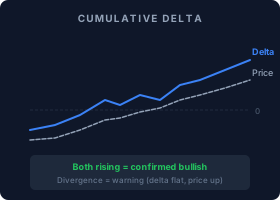
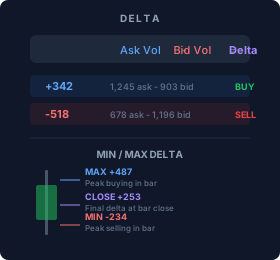
- Step 4: Confirm with deltaDefinitionAsk volume minus bid volume. Positive = more buying. Negative = more selling. Shows who is more aggressive. — if stacked buying imbalancesDefinitionA price level where one side overwhelms the other by 3:1 or more. Shows where big players committed. appear and cumulative deltaDefinitionRunning total of buying vs selling across the session. Shows who has been in control overall. is rising, the signal is confirmed. If delta is flat or falling despite imbalances, proceed with caution
- Step 5: Execute with context — never trade the footprint in isolation. Combine it with market structure (BOSDefinitionBreak of Structure — confirms a trend change. Price breaks the next swing point after CHoCH., CHoCHDefinitionChange of Character — the first warning a trend may be ending. Price breaks a swing point in the opposite direction., measured movesDefinitionA price projection where Leg B equals Leg A. Halsey's primary target is the -23.6% extension beyond 100%.) for the highest probability entries
The footprint is not a standalone system. It is the magnifying glass you use at key levels to see whether the setup is backed by real institutional flow or is just retail noise.
Common Mistakes When Reading Footprints
Avoid these pitfalls:
- Watching every tick — you do not need to read every row of every bar. Focus on the key levels. The footprint at random mid-range prices is noise. The footprint at support, resistance, and structural levels is signal
- Ignoring context — a stacked buying imbalanceDefinitionA price level where one side overwhelms the other by 3:1 or more. Shows where big players committed. means nothing if the higher timeframeDefinitionThe longest timeframe in a multi-timeframe stack — typically daily or 4-hour. Determines overall bias. structure is bearish and price is pushing into overhead resistance. Always read the footprint within the context of the broader market structure
- Over-complicating it — start with imbalancesDefinitionA price level where one side overwhelms the other by 3:1 or more. Shows where big players committed. and absorptionDefinitionHeavy aggressive orders hit a level but price doesn't move — a large passive player is absorbing the flow.. Those two signals alone will transform your trading. You do not need to master every footprint concept on day one
The Bottom Line
Footprint chartsDefinitionA chart showing bid and ask volume at every price inside each candle. Reveals who is buying and selling. show you what candlesticks hide: who is in control at every price level, where institutional traders committed size, and whether a move is backed by real aggression or is running on fumes.
The learning curve is real, but it is worth it. Once you can read the footprint, you will never look at a plain candlestick chart the same way again. Start with stacked imbalancesDefinition3+ consecutive price levels where one side overwhelms the other by 3:1. Marks institutional zones. and absorptionDefinitionHeavy aggressive orders hit a level but price doesn't move — a large passive player is absorbing the flow. at key levels. That alone gives you an edge that 95% of retail traders do not have.