
What Is the DOM (Depth of Market)?
The DOMDefinitionDepth of Market — the live order book. Shows passive intent (resting limit orders) at every price level around the inside market. — Depth of MarketDefinitionLive order book showing every resting limit order at every price. Bid size on left, price in middle, ask size on right. Also called Level 2 or the ladder., also called the Level 2DefinitionMarket data showing the full order book — every bid and ask at every price level. Powers the DOM. Required for serious order flow trading. order bookDefinitionThe complete list of all outstanding buy and sell limit orders at every price level. The DOM is its visualization. or simply the ladderDefinitionTrader slang for the DOM. Vertical layout of price levels with bid and ask sizes on either side. — is a real-time view of every resting limit orderDefinitionAn order that only fills at your chosen price (or better). Waits until the market reaches your price. at every price level around the current market. While a footprint chartDefinitionA chart showing bid and ask volume at every price inside each candle. Reveals who is buying and selling. shows you what already happened, the DOM shows you what traders are willing to do next.
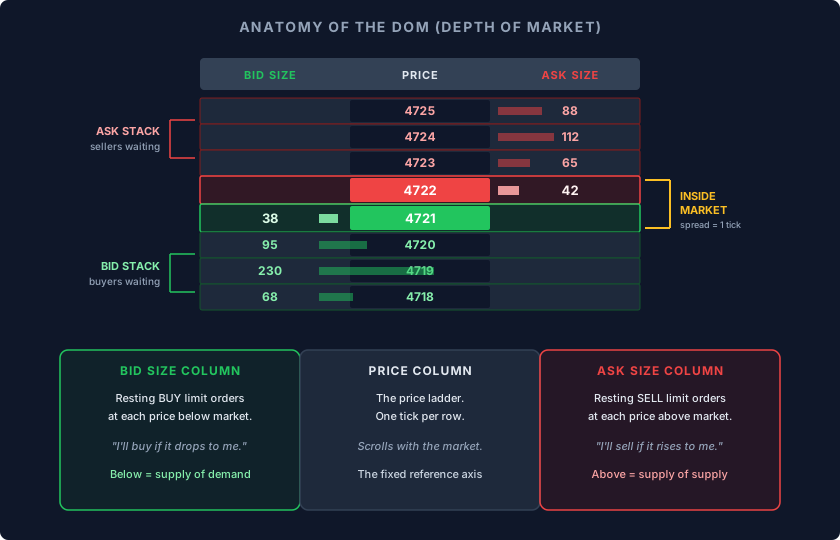
The DOMDefinitionDepth of Market — the live order book. Shows passive intent (resting limit orders) at every price level around the inside market. has three columns:
- Bid Size (left) — resting buy limit orders at each price below the market
- Price (center) — the price ladderDefinitionTrader slang for the DOM. Vertical layout of price levels with bid and ask sizes on either side., one tick per row
- Ask Size (right) — resting sell limit orders at each price above the market
Buyers stack below the current market price; sellers stack above it. The bars next to the size numbers visualize relative depth at each level — a long bar means heavy resting interest, a short bar means thin liquidityDefinitionResting orders (stop losses, limit orders) at known levels. Institutions need liquidity to fill large positions..
Why the DOM Matters
The DOMDefinitionDepth of Market — the live order book. Shows passive intent (resting limit orders) at every price level around the inside market. is the only tool that shows you intent in real time. Every other order flow tool — footprint, deltaDefinitionAsk volume minus bid volume. Positive = more buying. Negative = more selling. Shows who is more aggressive., volume profile — shows you actions that have already happened. The DOM shows you what is about to be possible:
- Where there are pockets of heavy resting size (areas where price will likely pause)
- Where there are gaps in the book (areas where price will move quickly with little resistance)
- When defenders show up at a level (real support/resistance forming)
- When defenders give up (orders being canceled before a move)
- When institutional patterns appear — hidden size showing up, walls of resting ordersDefinitionA limit order sitting on the DOM, waiting to be hit. The collection of resting orders is the order book. being defended, or one-sided flow being absorbed without price moving
Each of those institutional patterns has a specific name and signature. We will cover them one at a time in the sections below, in the order they typically build on each other.
The DOMDefinitionDepth of Market — the live order book. Shows passive intent (resting limit orders) at every price level around the inside market. tells you who is in the pool, not who already swam. Reading it well is one of the highest-edge skills in short-term trading.
The Inside Market & Spread
The inside marketDefinitionThe best bid and best ask — the two prices you can trade right now. Also called the NBBO. — also called the NBBODefinitionNational Best Bid and Offer — the inside market. Highest bid and lowest ask aggregated across all venues. (National Best BidDefinitionThe highest price someone is willing to buy at right now. Top of the bid stack on the DOM. and Offer) — is the highest bidDefinitionThe highest price someone is currently willing to pay to buy. If you sell at market, this is what you get. and the lowest askDefinitionThe lowest price someone is currently willing to sell at. If you buy at market, this is what you pay. currently available. The difference between them is the spreadDefinitionThe gap between the bid and ask price. Usually 1 tick on active contracts during RTH. Wider spread = more expensive to trade..
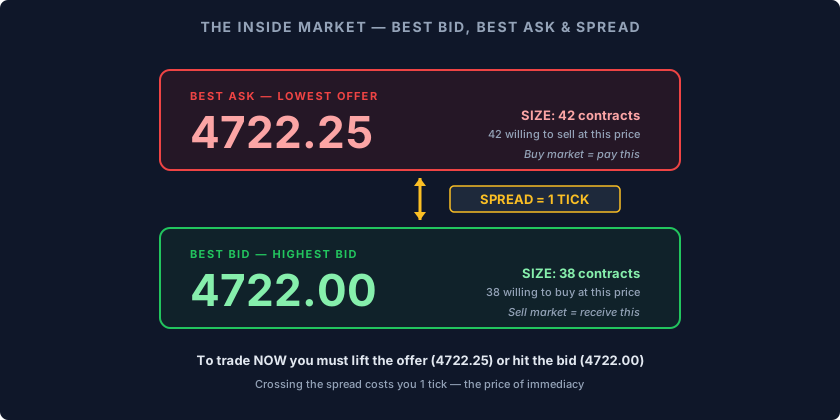
In liquid futures (ESDefinitionE-mini S&P 500 futures contract. Tracks the S&P 500 index. 1 tick = $12.50, 1 point = $50. Most heavily traded index future., NQDefinitionE-mini Nasdaq 100 futures contract. Known for fast, volatile moves. 1 tick = $5, 1 point = $20., GC), the spreadDefinitionThe gap between the bid and ask price. Usually 1 tick on active contracts during RTH. Wider spread = more expensive to trade. is almost always 1 tick. To trade NOW you have two choices:
- Lift the offerDefinitionTo buy aggressively at the best ask. Prints on the ask side of footprint charts and shows positive delta. — pay the best askDefinitionThe lowest price someone is willing to sell at right now. Bottom of the ask stack on the DOM.. You are buying aggressively.
- Hit the bidDefinitionTo sell aggressively at the best bid. Prints on the bid side of footprint charts and shows negative delta. — sell at the best bidDefinitionThe highest price someone is willing to buy at right now. Top of the bid stack on the DOM.. You are selling aggressively.
Crossing the spreadDefinitionTo execute a trade by paying the unfavorable side of the spread — buy at ask or sell at bid. The cost of immediacy. costs you 1 tick. That is the price of immediacy. The alternative is to place a limit orderDefinitionAn order that only fills at your chosen price (or better). Waits until the market reaches your price. at the bidDefinitionThe highest price someone is currently willing to pay to buy. If you sell at market, this is what you get. or askDefinitionThe lowest price someone is currently willing to sell at. If you buy at market, this is what you pay. and wait — which makes you the passive participantDefinitionA resting limit order on the DOM that provides liquidity. Doesn't pay the spread — but may not get filled..
Watch the size at the inside marketDefinitionThe best bid and best ask — the two prices you can trade right now. Also called the NBBO. as much as the price. When best bidDefinitionThe highest price someone is willing to buy at right now. Top of the bid stack on the DOM. and best askDefinitionThe lowest price someone is willing to sell at right now. Bottom of the ask stack on the DOM. sizes shrink dramatically, liquidityDefinitionResting orders (stop losses, limit orders) at known levels. Institutions need liquidity to fill large positions. is drying up — slippageDefinitionWhen your fill price differs from the price you saw. Common on market orders in fast markets. risk is rising. Switch from market orders to limits.
Passive vs Aggressive Orders
Every fill happens between two participants:
- A passive participantDefinitionA resting limit order on the DOM that provides liquidity. Doesn't pay the spread — but may not get filled. — a resting limit orderDefinitionAn order that only fills at your chosen price (or better). Waits until the market reaches your price. on the DOMDefinitionDepth of Market — the live order book. Shows passive intent (resting limit orders) at every price level around the inside market., providing liquidityDefinitionResting orders (stop losses, limit orders) at known levels. Institutions need liquidity to fill large positions.
- An aggressive participantDefinitionA market order that crosses the spread to execute immediately. Consumes liquidity. Pays the spread for immediacy. — a market orderDefinitionAn order to buy or sell RIGHT NOW at whatever price is available. Fastest execution, but you take the current price. that crosses the spreadDefinitionThe gap between the bid and ask price. Usually 1 tick on active contracts during RTH. Wider spread = more expensive to trade., taking liquidityDefinitionResting orders (stop losses, limit orders) at known levels. Institutions need liquidity to fill large positions.
The DOMDefinitionDepth of Market — the live order book. Shows passive intent (resting limit orders) at every price level around the inside market. is the army of passive ordersDefinitionA resting limit order on the DOM that provides liquidity. Doesn't pay the spread — but may not get filled. waiting to be hit. The tapeDefinitionTrader slang for time and sales — the running stream of executed trades. 'Reading the tape' = inferring direction from prints. (time and salesDefinitionReal-time list of executed trades — timestamp, price, size, side. The DOM shows intent; the tape shows action.) shows the aggressive ordersDefinitionA market order that crosses the spread to execute immediately. Consumes liquidity. Pays the spread for immediacy. hitting them.
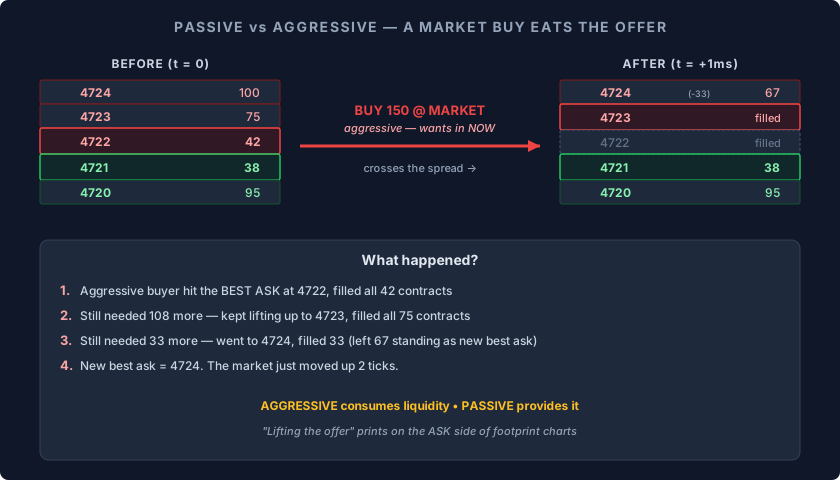
When a 150-lot market buy comes in:
- It hits the best askDefinitionThe lowest price someone is willing to sell at right now. Bottom of the ask stack on the DOM., fills the size resting there
- Still needs more — lifts to the next price up, fills that level
- Still needs more — keeps climbing until the order is satisfied
- New best askDefinitionThe lowest price someone is willing to sell at right now. Bottom of the ask stack on the DOM. = the highest level it had to reach. The market just moved up.
This is "lifting the offer" — aggressive buying that prints on the askDefinitionThe lowest price someone is currently willing to sell at. If you buy at market, this is what you pay. side of footprint chartsDefinitionA chart showing bid and ask volume at every price inside each candle. Reveals who is buying and selling.. The opposite is "hitting the bidDefinitionThe highest price someone is currently willing to pay to buy. If you sell at market, this is what you get." — aggressive selling.
Aggressive consumes liquidityDefinitionResting orders (stop losses, limit orders) at known levels. Institutions need liquidity to fill large positions.. Passive provides it. When you watch the DOMDefinitionDepth of Market — the live order book. Shows passive intent (resting limit orders) at every price level around the inside market., you are watching the providers. When you watch the tapeDefinitionTrader slang for time and sales — the running stream of executed trades. 'Reading the tape' = inferring direction from prints., you are watching the consumers.
Stacked Bids & Stacked Offers
When you see multiple consecutive price levels with unusually large size, it is a stacked book — a wall of resting ordersDefinitionA limit order sitting on the DOM, waiting to be hit. The collection of resting orders is the order book.. This often signals an institution defending a level.
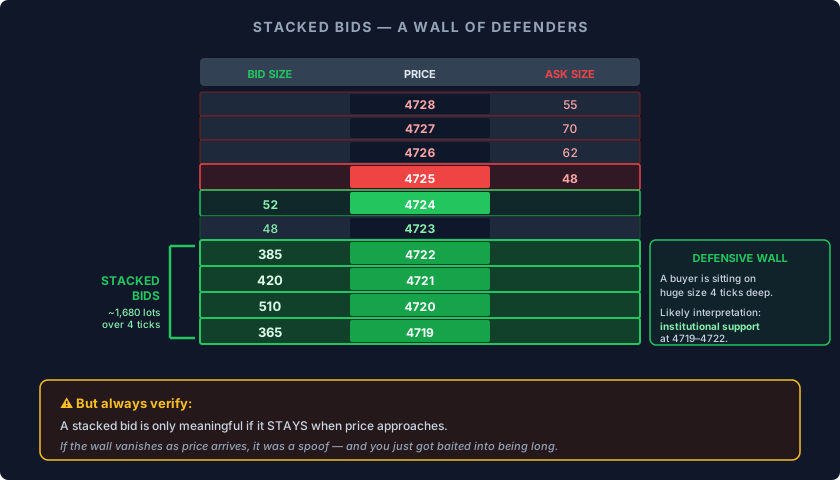
- Stacked bidsDefinitionMultiple consecutive price levels with large bid sizes — a wall of buyers defending an area. Real walls hold; fake ones (spoofs) get pulled. below the market = potential support
- Stacked offersDefinitionMultiple consecutive price levels with large ask sizes — a wall of sellers defending an area. Real walls hold when tested. above the market = potential resistance
But there is a catch: a stacked bidDefinitionMultiple consecutive price levels with large bid sizes — a wall of buyers defending an area. Real walls hold; fake ones (spoofs) get pulled. only matters if it stays when price approaches. If the wall vanishes as price arrives, the orders were never really there — a deceptive tactic with a specific name that we will define in the very next section.
An icebergDefinitionHidden-size orders. The DOM shows a small slice; the true order is much larger and refills automatically. is a large order that only displays a small "tip" on the DOMDefinitionDepth of Market — the live order book. Shows passive intent (resting limit orders) at every price level around the inside market. at any given time. As the visible portion gets filled, more is automatically released. Institutions use icebergs to hide their true size and avoid moving the market against themselves.
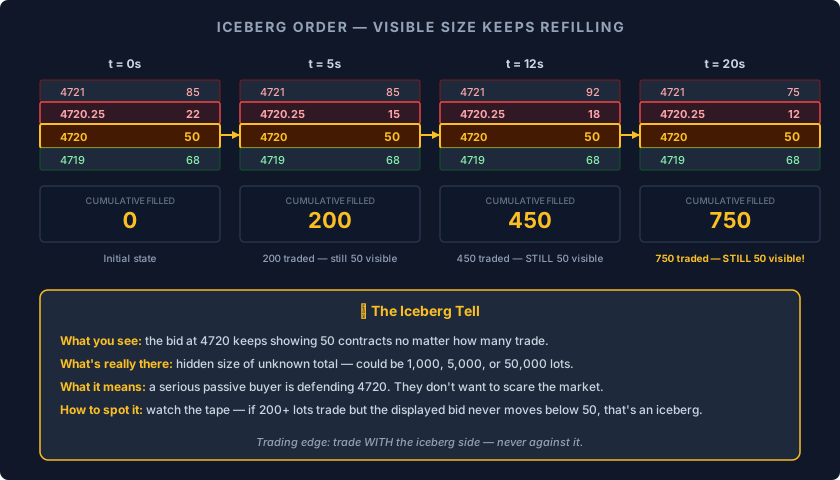
What you see: the bidDefinitionThe highest price someone is currently willing to pay to buy. If you sell at market, this is what you get. keeps showing 50 contracts no matter how many trade.
What is really there: hidden size of unknown total — could be 1,000, 5,000, or 50,000 lots.
What it means: a serious passive buyer is defending the level and does not want to scare the market.
How to spot one: watch the tapeDefinitionTrader slang for time and sales — the running stream of executed trades. 'Reading the tape' = inferring direction from prints.. If 200+ lots trade at a price but the displayed bidDefinitionThe highest price someone is currently willing to pay to buy. If you sell at market, this is what you get. never drops below 50, that is an icebergDefinitionHidden-size orders. The DOM shows a small slice; the true order is much larger and refills automatically. refilling.
Trade WITH icebergsDefinitionHidden-size orders. The DOM shows a small slice; the true order is much larger and refills automatically., never against them. A confirmed iceberg is the footprint of size. The institution placing it has the patience and capital to defend the level. Long against an iceberg bidDefinitionThe highest price someone is currently willing to pay to buy. If you sell at market, this is what you get. is high-probability; short against an iceberg offer is fighting the institution.
Spoofing & Layering
SpoofingDefinitionPlacing large orders with no intent to fill, just to mislead other traders. Canceled before they can be hit. Illegal under Dodd-Frank. is placing large orders with no intent to fill them, just to manipulate other traders' perception of supply and demand. The order is canceled before it can be hit. Spoofing is illegal under Dodd-Frank, but it still happens — and even when it is not malicious, rapidly-pulled liquidityDefinitionResting orders (stop losses, limit orders) at known levels. Institutions need liquidity to fill large positions. tells you the resting ordersDefinitionA limit order sitting on the DOM, waiting to be hit. The collection of resting orders is the order book. were not real.
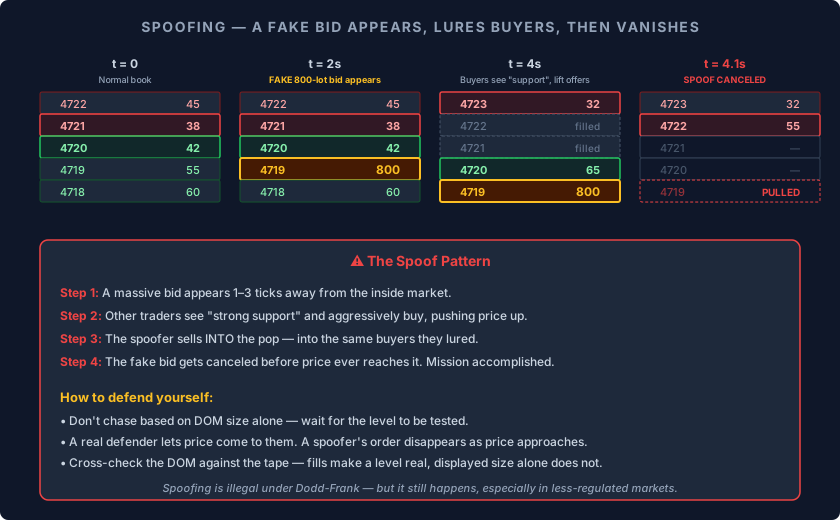
The spoof pattern unfolds in four steps:
- A massive bidDefinitionThe highest price someone is currently willing to pay to buy. If you sell at market, this is what you get. appears 1–3 ticks away from the inside marketDefinitionThe best bid and best ask — the two prices you can trade right now. Also called the NBBO.
- Other traders see "strong support" and aggressively buy, pushing price up
- The spoofer sells INTO the pop — into the same buyers they lured
- The fake bidDefinitionThe highest price someone is currently willing to pay to buy. If you sell at market, this is what you get. gets canceled before price ever reaches it
The defense is simple: don't chase based on DOMDefinitionDepth of Market — the live order book. Shows passive intent (resting limit orders) at every price level around the inside market. size alone. Wait for the level to be tested. A real defender lets price come to them. A spoofer's order disappears as price approaches.
Real vs fake: a true defender's order HOLDS when price arrives. A spoofer's order VANISHES when price gets close. The difference between the two is everything in DOMDefinitionDepth of Market — the live order book. Shows passive intent (resting limit orders) at every price level around the inside market. reading.
LayeringDefinitionA form of spoofing — fake orders placed at multiple price levels to create the illusion of a deeper book. is a related tactic — placing fake orders at multiple price levels to create the illusion of a bigger book. Same defense applies.
Absorption on the DOM
AbsorptionDefinitionHeavy aggressive orders hit a level but price doesn't move — a large passive player is absorbing the flow. is when a large passive orderDefinitionA resting limit order on the DOM that provides liquidity. Doesn't pay the spread — but may not get filled. soaks up aggressive flow without letting price move. On the DOMDefinitionDepth of Market — the live order book. Shows passive intent (resting limit orders) at every price level around the inside market., you see heavy size at a level being repeatedly hit — but the size does not drop (it refills) and price does not move past it. This is one of the strongest reversal signals in order flow.
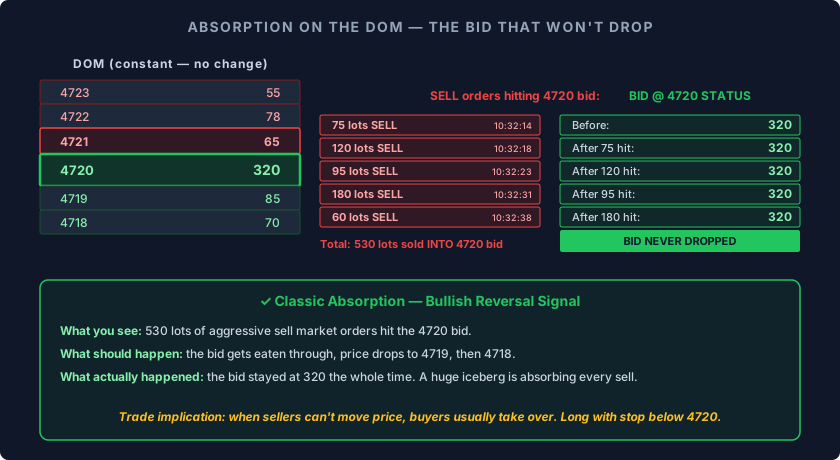
What you see: 530 lots of aggressive sell market orders hit a 320 bidDefinitionThe highest price someone is currently willing to pay to buy. If you sell at market, this is what you get..
What should happen: the bidDefinitionThe highest price someone is currently willing to pay to buy. If you sell at market, this is what you get. gets eaten through, price drops a tick, then another.
What actually happened: the bidDefinitionThe highest price someone is currently willing to pay to buy. If you sell at market, this is what you get. stayed at 320 the whole time. A huge icebergDefinitionHidden-size orders. The DOM shows a small slice; the true order is much larger and refills automatically. is absorbing every sell.
When sellers cannot move price despite heavy aggression, buyers usually take over. Look long with stop below the absorbing level.
AbsorptionDefinitionHeavy aggressive orders hit a level but price doesn't move — a large passive player is absorbing the flow. vs spoofingDefinitionPlacing large orders with no intent to fill, just to mislead other traders. Canceled before they can be hit. Illegal under Dodd-Frank.: absorption involves real filled trades — you will see them on the tapeDefinitionTrader slang for time and sales — the running stream of executed trades. 'Reading the tape' = inferring direction from prints.. Spoofing involves orders that get canceled before fills. Always cross-check the DOMDefinitionDepth of Market — the live order book. Shows passive intent (resting limit orders) at every price level around the inside market. with the tape.
Pulling Liquidity (The Vacuum)
The opposite of stacked support is pulled liquidityDefinitionResting orders (stop losses, limit orders) at known levels. Institutions need liquidity to fill large positions. — when resting ordersDefinitionA limit order sitting on the DOM, waiting to be hit. The collection of resting orders is the order book. rapidly cancel right before a move. If bids vanish before a drop, sellers know something. If offers vanish before a rip, buyers know something. Watching the DOMDefinitionDepth of Market — the live order book. Shows passive intent (resting limit orders) at every price level around the inside market. thin out is often a leading indicator of the next leg.
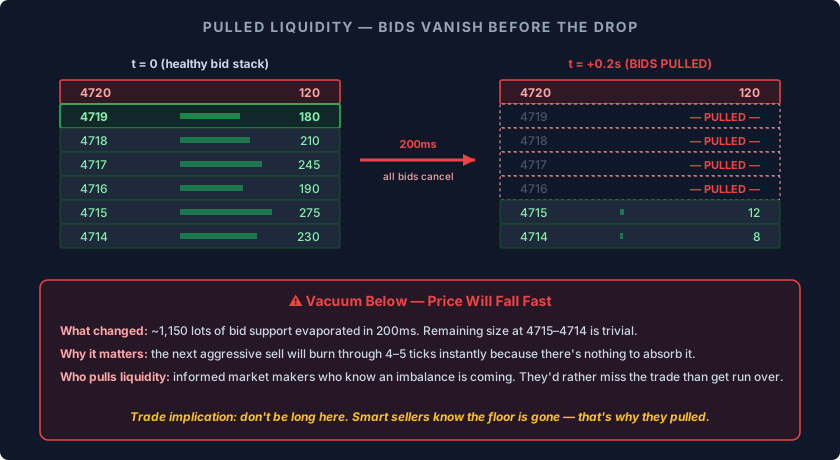
When defenders yank their orders, they are either preparing to flip directions or they know something is coming. Either way, the side they were defending is no longer being defended.
Smart sellers know when the floor is gone — that is why they pull. If you see a sudden cascade of cancellations on the bidDefinitionThe highest price someone is currently willing to pay to buy. If you sell at market, this is what you get. side, get out of longs.
DOM + Time and Sales (The Tape)
The DOMDefinitionDepth of Market — the live order book. Shows passive intent (resting limit orders) at every price level around the inside market. and the tapeDefinitionTrader slang for time and sales — the running stream of executed trades. 'Reading the tape' = inferring direction from prints. are two halves of the same picture:
- DOMDefinitionDepth of Market — the live order book. Shows passive intent (resting limit orders) at every price level around the inside market. = resting intent (what people will do)
- Tape = executed action (what people did)
Reading them together is how professional scalpers operate. The classic combination:
- The tapeDefinitionTrader slang for time and sales — the running stream of executed trades. 'Reading the tape' = inferring direction from prints. tells you 470 lots sold aggressively into a level in under a second
- The DOMDefinitionDepth of Market — the live order book. Shows passive intent (resting limit orders) at every price level around the inside market. tells you the 210-lot bidDefinitionThe highest price someone is currently willing to pay to buy. If you sell at market, this is what you get. did not drop — it absorbed everything
- The tapeDefinitionTrader slang for time and sales — the running stream of executed trades. 'Reading the tape' = inferring direction from prints. then shows trades printing on the askDefinitionThe lowest price someone is currently willing to sell at. If you buy at market, this is what you pay. above — buyers stepping in
- Conclusion: that level is real support. The seller exhausted, the buyer took over.
Without the tapeDefinitionTrader slang for time and sales — the running stream of executed trades. 'Reading the tape' = inferring direction from prints., you would not know the bidDefinitionThe highest price someone is currently willing to pay to buy. If you sell at market, this is what you get. was being hit. Without the DOMDefinitionDepth of Market — the live order book. Shows passive intent (resting limit orders) at every price level around the inside market., you would not know the bid stood firm. You need both.
Pro tip: color your tape so trades hitting the bidDefinitionThe highest price someone is currently willing to pay to buy. If you sell at market, this is what you get. show red and trades lifting the offer show green. This makes it trivial to see directional pressure at a glance — and to spot when aggression flips.
DOM vs Footprint — How They Complement
Both are order flow tools, but they answer different questions:
- The DOMDefinitionDepth of Market — the live order book. Shows passive intent (resting limit orders) at every price level around the inside market. is a live snapshot of resting intent. Real-time. Tick by tick. Future-facing.
- The footprint is a permanent record of what actually traded. Historical. Per-bar. Past-facing.
The professional workflow uses both:
- Use the footprint to identify which levels matter — high-volume nodesDefinitionA local high-volume area on the volume profile. Acts as support/resistance; price pauses and reacts at HVNs., imbalancesDefinitionA price level where one side overwhelms the other by 3:1 or more. Shows where big players committed., absorptionDefinitionHeavy aggressive orders hit a level but price doesn't move — a large passive player is absorbing the flow. signatures from prior bars
- Watch the DOMDefinitionDepth of Market — the live order book. Shows passive intent (resting limit orders) at every price level around the inside market. at those levels for confirmation that defenders are still showing up — or that they have vanished
- Confirm with the tapeDefinitionTrader slang for time and sales — the running stream of executed trades. 'Reading the tape' = inferring direction from prints. to see actual aggressive flow hitting the level
Limitations of the DOM
The DOMDefinitionDepth of Market — the live order book. Shows passive intent (resting limit orders) at every price level around the inside market. only shows resting visible orders. It cannot show:
- IcebergDefinitionHidden-size orders. The DOM shows a small slice; the true order is much larger and refills automatically. remainders — only the visible tip is shown; the hidden balance is invisible
- Hidden ordersDefinitionA limit order that doesn't display on the DOM at all — fully invisible until it executes. — some venues allow fully-hidden orders that never display
- Stops — stop lossDefinitionAn automatic exit order. If price moves against you to a preset level, the trade closes automatically. Every trade needs one. orders only become visible when triggered (then they execute as market orders)
- Routed orders — orders being held by smart-routing systems before they hit the book
This means the DOMDefinitionDepth of Market — the live order book. Shows passive intent (resting limit orders) at every price level around the inside market. is necessary but not sufficient. Always cross-check what the DOM SHOWS against what the tapeDefinitionTrader slang for time and sales — the running stream of executed trades. 'Reading the tape' = inferring direction from prints. FILLS — the difference between the two is where institutional behavior reveals itself.
Quick Reference: High-Edge DOM Patterns
- IcebergDefinitionHidden-size orders. The DOM shows a small slice; the true order is much larger and refills automatically. defense — visible size keeps refilling despite heavy flow → trade WITH the iceberg side
- Stacked wall — three or more levels of abnormally large size → potential support/resistance, but only if it stays
- Pulled bidsDefinitionBid-side resting orders cancel en masse — informed buyers stepping aside. Often precedes a fast move down./offers — resting size cancels in milliseconds → defenders giving up, expect price to move into the vacuum
- Spoof or layer — large order appears, lures, then cancels → ignore size alone, wait for the level to be tested
- Thinning inside marketDefinitionThe best bid and best ask — the two prices you can trade right now. Also called the NBBO. — best bidDefinitionThe highest price someone is willing to buy at right now. Top of the bid stack on the DOM./askDefinitionThe lowest price someone is currently willing to sell at. If you buy at market, this is what you pay. sizes shrinking → liquidityDefinitionResting orders (stop losses, limit orders) at known levels. Institutions need liquidity to fill large positions. drying up, slippageDefinitionWhen your fill price differs from the price you saw. Common on market orders in fast markets. risk rising
- AbsorptionDefinitionHeavy aggressive orders hit a level but price doesn't move — a large passive player is absorbing the flow. confirmation — heavy aggression on the tapeDefinitionTrader slang for time and sales — the running stream of executed trades. 'Reading the tape' = inferring direction from prints., DOMDefinitionDepth of Market — the live order book. Shows passive intent (resting limit orders) at every price level around the inside market. size does not drop, price does not move → strongest reversal pattern
The Bottom Line
The DOMDefinitionDepth of Market — the live order book. Shows passive intent (resting limit orders) at every price level around the inside market. does not predict where price WILL go. It shows where the market WANTS price to go — and just as importantly, where defenders are no longer willing to fight. Combine it with the tapeDefinitionTrader slang for time and sales — the running stream of executed trades. 'Reading the tape' = inferring direction from prints. to confirm action, and with the footprint to see which levels matter, and you have a complete real-time picture of order flow.
Start by simply watching the DOMDefinitionDepth of Market — the live order book. Shows passive intent (resting limit orders) at every price level around the inside market. at known levels — prior day high/low, VWAPDefinitionVolume Weighted Average Price — the average price weighted by volume. Institutional benchmark for fair value., session POCDefinitionPoint of Control — the price with the highest volume. Where the most trading happened.. Notice when size shows up to defend. Notice when it disappears. After a few sessions, the patterns become unmistakable.