
What Is a Climax?
A climax is the final, most violent surge of a trend — the moment when the last buyers (or sellers) pile in, exhaust themselves, and reverse. It is the *peak emotional event* of the move. After a real climax, the trend is over.
Climaxes happen because trends end with a final emotional flush, not with a slow fade. The last shorts capitulate at the top of a rally. The last longs capitulate at the bottom of a sell-off. The volume signature is unmistakable.
Recognizing climaxes early is one of the most profitable skills in trading because the reversal that follows is usually fast, large, and tradable.
Buying Climax (At the Top)
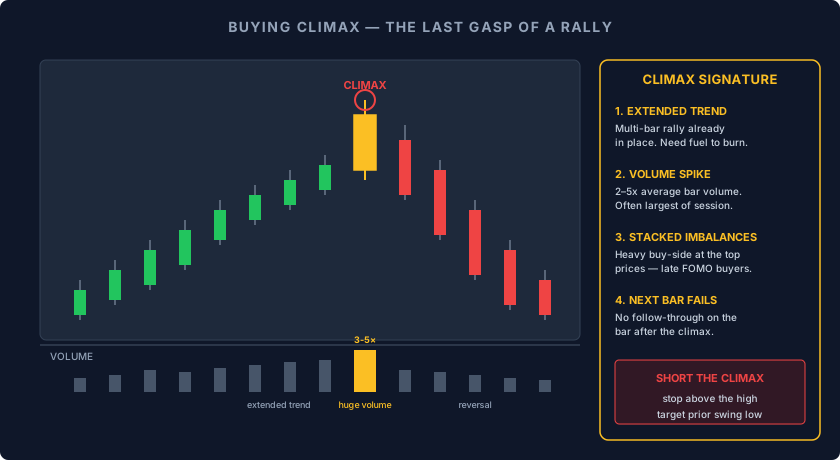
A buying climaxDefinitionThe peak emotional event of a rally — a single bar with massive volume at the top of an extended move. Reversal usually follows. has three ingredients:
- An extended rally already in place — climax requires fuel to burn. A 5-bar rally is not enough; look for moves that have run for hours or days.
- A massive volume spike — the climax bar shows volume 2–5x the recent average. Often the highest-volume barDefinitionBars that close after a fixed quantity of contracts traded. Rarely used by discretionary traders. of the session.
- Heavy askDefinitionThe lowest price someone is currently willing to sell at. If you buy at market, this is what you pay.-side activity at the high — the footprint shows buyers piling in at the very top, usually with stacked buying imbalancesDefinitionA price level where one side overwhelms the other by 3:1 or more. Shows where big players committed. at the extreme
The mistake new traders make: they see the volume spike and the strong deltaDefinitionAsk volume minus bid volume. Positive = more buying. Negative = more selling. Shows who is more aggressive., and they assume continuation. But this is the moment when the last late buyers FOMO in — there is nobody left to keep buying. The next bars usually reverse hard.
A buying climaxDefinitionThe peak emotional event of a rally — a single bar with massive volume at the top of an extended move. Reversal usually follows. looks bullish in the moment and is the most reliable top signal in order flow. The biggest, greenest, highest-volume barDefinitionBars that close after a fixed quantity of contracts traded. Rarely used by discretionary traders. at the end of a long rally is usually the death rattle of that rally — not its strongest leg.
Selling Climax (At the Bottom)
The mirror image. Three ingredients:
- An extended sell-off already in place
- A massive volume spike — often a "flush" bar 2–5x recent average volume
- Heavy bidDefinitionThe highest price someone is currently willing to pay to buy. If you sell at market, this is what you get.-side activity at the low — stacked selling imbalancesDefinitionA price level where one side overwhelms the other by 3:1 or more. Shows where big players committed. at the bottom prices
Selling climaxes often coincide with bad news, panic, or stop-cascade flushes. The footprint shows desperate sellers hitting bids at the lows. Once those final sellers are out, there is nobody left to sell — and price reverses up sharply.
How to Identify a Climax in Real Time
Watch for these signatures together:
- Bar volume vs recent average — climax bars print 2–5x average. A volume tool that highlights this is essential.
- Footprint at the extreme — heavy stacked imbalancesDefinition3+ consecutive price levels where one side overwhelms the other by 3:1. Marks institutional zones. on the trend side at the bar's extreme price (heavy askDefinitionThe lowest price someone is currently willing to sell at. If you buy at market, this is what you pay.-side imbalances at the top of a buying climaxDefinitionThe peak emotional event of a rally — a single bar with massive volume at the top of an extended move. Reversal usually follows., heavy bidDefinitionThe highest price someone is currently willing to pay to buy. If you sell at market, this is what you get.-side at the bottom of a selling climaxDefinitionThe peak emotional event of a sell-off — massive volume at the bottom signaling panic capitulation. Reversal up usually follows.)
- Bar length — climax bars are often the largest-range barDefinitionBars that close after price moves a fixed amount. Uniform bar size produces cleaner footprint signatures. Best for execution. of the session
- Wick extent — many climaxes form a long wick on the climax bar itself or the next bar (failed continuation)
- Cumulative deltaDefinitionRunning total of buying vs selling across the session. Shows who has been in control overall. — strong final push, often the largest delta print of the move
- Context — must be at the end of an extended trend, ideally at a known reference (PDHDefinitionPrior Day High — the highest price from yesterday's RTH session. A key level every trader watches./PDLDefinitionPrior Day Low — the lowest price from yesterday's RTH session. A key level every trader watches., weekly POCDefinitionPoint of Control — the price with the highest volume. Where the most trading happened., naked POCDefinitionPrior-session POCs that price never retested. Act as magnets — price tends to come back to them. overhead/below)
Climax vs Continuation
Volume + strong deltaDefinitionAsk volume minus bid volume. Positive = more buying. Negative = more selling. Shows who is more aggressive. is not always climax. The difference:
- Continuation: strong volume on a *trending* bar in the middle of a move, with continued participation on subsequent bars
- Climax: strong volume on the bar that *ends* a move, followed by absent participation on subsequent bars
The confirmation is what happens NEXT. If the bar after the volume spike fails to continue (no follow-through), that's climax confirmed.
How to Trade a Climax
Two approaches:
Aggressive entry — short the high (or long the low) on the next bar after the climax bar prints. This is high-conviction but high-risk. Stop above (or below) the climax extreme.
Patient entry — wait for one of the following confirmations:
- A failed retest of the climax extreme
- An absorptionDefinitionHeavy aggressive orders hit a level but price doesn't move — a large passive player is absorbing the flow. signature on the retest
- A break of the immediate swing lowDefinitionA trough on the chart where price reversed higher. Marks where buyers previously overpowered sellers. (after a buying climaxDefinitionThe peak emotional event of a rally — a single bar with massive volume at the top of an extended move. Reversal usually follows.) or swing highDefinitionA peak on the chart where price reversed lower. Marks where sellers previously overpowered buyers. (after a selling climaxDefinitionThe peak emotional event of a sell-off — massive volume at the bottom signaling panic capitulation. Reversal up usually follows.)
The patient entry has lower R:R but much higher win rate. Most professionals use the patient version.
Common Mistakes
- Calling every volume spike a climax — climax requires an extended trend BEFORE the spike. Mid-range volume spikes are often just news reactions, not climaxes.
- Fading too early — high volume in the middle of a trend is continuation, not climax. Wait for the move to be extended.
- Ignoring context — a climax inside a balance area means less than a climax at a major reference level (PDHDefinitionPrior Day High — the highest price from yesterday's RTH session. A key level every trader watches., weekly POCDefinitionPoint of Control — the price with the highest volume. Where the most trading happened.).
- Not using a hard stop — climaxes occasionally fail. Always have a stop just beyond the climax extreme.
The Bottom Line
Climaxes are the moments when trends die. The crowd piles in at the worst possible time. The footprint shows you exactly when this is happening: massive volume + stacked imbalancesDefinition3+ consecutive price levels where one side overwhelms the other by 3:1. Marks institutional zones. at the extreme + an extended prior move.
When you see all three at once, the trend is almost certainly over. Wait for confirmation, take the trade with a tight stop, and ride the reversal. These setups are rare but they pay for entire weeks.