
What Is Delta?
Delta is the difference between aggressive buying volume (askDefinitionThe lowest price someone is currently willing to sell at. If you buy at market, this is what you pay.) and aggressive selling volume (bidDefinitionThe highest price someone is currently willing to pay to buy. If you sell at market, this is what you get.) at a price level or for an entire bar. It strips away the noise of total volume and shows you the net aggression — who is pushing harder, buyers or sellers.
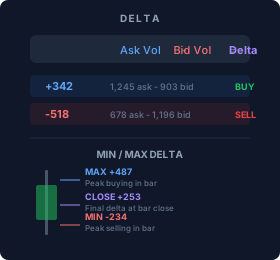
A bar with total volume of 2,000 contracts might look significant — but if 1,010 traded at the askDefinitionThe lowest price someone is currently willing to sell at. If you buy at market, this is what you pay. and 990 at the bidDefinitionThe highest price someone is currently willing to pay to buy. If you sell at market, this is what you get., the deltaDefinitionAsk volume minus bid volume. Positive = more buying. Negative = more selling. Shows who is more aggressive. is only +20. The volume was high, but there was no conviction on either side. Delta reveals this.
Delta answers the question that volume alone cannot: is the volume bullish or bearish? A 2,000-contract bar with +800 deltaDefinitionAsk volume minus bid volume. Positive = more buying. Negative = more selling. Shows who is more aggressive. is very different from a 2,000-contract bar with -800 delta — even though the total volume is identical.
Bar Delta vs Price Level Delta
Two ways to read deltaDefinitionAsk volume minus bid volume. Positive = more buying. Negative = more selling. Shows who is more aggressive.:
- Bar Delta — sums all askDefinitionThe lowest price someone is currently willing to sell at. If you buy at market, this is what you pay. and bidDefinitionThe highest price someone is currently willing to pay to buy. If you sell at market, this is what you get. volume across every price level in the candle, then subtracts bid from ask. Gives you the net aggression for the entire bar. Positive = more aggressive buying, negative = more aggressive selling
- Price Level Delta — shows deltaDefinitionAsk volume minus bid volume. Positive = more buying. Negative = more selling. Shows who is more aggressive. at each individual price level inside the footprint. More granular. A bar might have positive overall delta, but the top three price levels might have negative delta, meaning buying was concentrated at the bottom and sellers were active at the top
Cumulative Delta
Cumulative deltaDefinitionRunning total of buying vs selling across the session. Shows who has been in control overall. is a running total of bar delta across the entire session. It starts at zero when the session opens and adds each bar's delta to the running total.
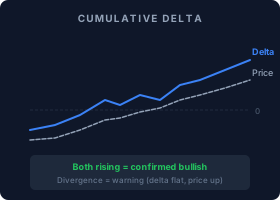
How to read cumulative deltaDefinitionRunning total of buying vs selling across the session. Shows who has been in control overall.:
- Rising cumulative deltaDefinitionRunning total of buying vs selling across the session. Shows who has been in control overall. — aggressive buyers have been dominant since the session opened
- Falling cumulative deltaDefinitionRunning total of buying vs selling across the session. Shows who has been in control overall. — aggressive sellers have been dominant
- The direction tells you who has controlled the session overall
Delta divergences — the most powerful signal:
- Bearish divergenceDefinitionPrice prints a higher high while delta prints a lower high. Buyers losing fuel — sell signal at the new high. — price makes a new high but cumulative deltaDefinitionRunning total of buying vs selling across the session. Shows who has been in control overall. does not. Buyers are losing conviction. The move is weakening
- Bullish divergenceDefinitionPrice prints a lower low while delta prints a higher low. Sellers losing fuel — buy signal at the new low. — price makes a new low but cumulative deltaDefinitionRunning total of buying vs selling across the session. Shows who has been in control overall. does not. Sellers are losing conviction. A reversal may be coming
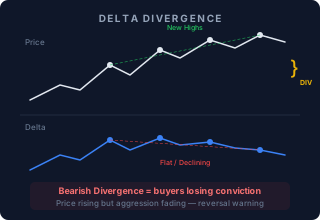
Delta divergences are early warnings. Price making new highs without corresponding new highs in cumulative deltaDefinitionRunning total of buying vs selling across the session. Shows who has been in control overall. means the move is running on fumes. Smart money is already positioning for the reversal.
Min Delta and Max Delta
Every bar has a final deltaDefinitionAsk volume minus bid volume. Positive = more buying. Negative = more selling. Shows who is more aggressive. value at the close. But during the formation of the bar, delta fluctuates — it reaches peaks and troughs before settling at its closing value.
- Max Delta — the highest positive deltaDefinitionAsk volume minus bid volume. Positive = more buying. Negative = more selling. Shows who is more aggressive. reached during the bar's formation. Represents peak buying aggression. If max delta was +487 but the bar closed at +253, that means 234 contracts of buying were absorbed by sellers before close
- Min Delta — the lowest negative deltaDefinitionAsk volume minus bid volume. Positive = more buying. Negative = more selling. Shows who is more aggressive. reached during formation. Represents peak selling aggression. If min delta was -234 but the bar closed at +253, sellers had a strong push but buyers ultimately won
Why min/max deltaDefinitionAsk volume minus bid volume. Positive = more buying. Negative = more selling. Shows who is more aggressive. matters:
- The difference between max deltaDefinitionAsk volume minus bid volume. Positive = more buying. Negative = more selling. Shows who is more aggressive. and close delta tells you about selling absorptionDefinitionHeavy aggressive orders hit a level but price doesn't move — a large passive player is absorbing the flow. within the bar
- The difference between min deltaDefinitionAsk volume minus bid volume. Positive = more buying. Negative = more selling. Shows who is more aggressive. and close delta tells you about buying recovery
- A bar with very high max deltaDefinitionAsk volume minus bid volume. Positive = more buying. Negative = more selling. Shows who is more aggressive. but low close delta suggests that aggressive buying was absorbed — potential exhaustionDefinitionWhen a price extreme is reached but the aggressive volume that should be driving it is missing. Classic reversal signal — the move ran out of participants.
Min/max deltaDefinitionAsk volume minus bid volume. Positive = more buying. Negative = more selling. Shows who is more aggressive. reveals the battle that happened inside each candle. A bar that shows +253 at the close might look calm — but if max delta was +487 and min delta was -234, there was a 721-point war inside that single candle. The footprint shows you who won.
Delta Bars
Delta barsDefinitionColored bars showing net buying vs selling per candle. Blue = buyers won. Red = sellers won. are a visual representation of per-bar deltaDefinitionAsk volume minus bid volume. Positive = more buying. Negative = more selling. Shows who is more aggressive. displayed as colored bars below or overlaid on your chart. Blue bars indicate positive delta (more aggressive buying). Red or magenta bars indicate negative delta (more aggressive selling). The height of the bar represents the magnitude of the delta.
Delta barsDefinitionColored bars showing net buying vs selling per candle. Blue = buyers won. Red = sellers won. give you an instant visual read on who controlled each candle without needing to read the footprint numbers. A sequence of tall blue deltaDefinitionAsk volume minus bid volume. Positive = more buying. Negative = more selling. Shows who is more aggressive. bars confirms sustained buying pressure. A flip from blue to red signals a shift in aggression.
Using Delta With Structure
Delta is most powerful when combined with market structure and other footprint signals. A BOSDefinitionBreak of Structure — confirms a trend change. Price breaks the next swing point after CHoCH. to the upside confirmed by rising cumulative deltaDefinitionRunning total of buying vs selling across the session. Shows who has been in control overall. is much higher probability than a BOS with flat or negative delta. A stacked buying imbalanceDefinitionA price level where one side overwhelms the other by 3:1 or more. Shows where big players committed. at a support level with positive bar delta is the highest-conviction entry.
Never trade deltaDefinitionAsk volume minus bid volume. Positive = more buying. Negative = more selling. Shows who is more aggressive. in isolation. Delta tells you who is aggressive right now. Structure tells you the direction. ImbalancesDefinitionA price level where one side overwhelms the other by 3:1 or more. Shows where big players committed. tell you where institutions committed. When all three align — that is the trade.