
Auction Market Theory: The Foundation
At any given moment, the market is doing one of two things: chopping sideways (balance) or moving in one direction (trending). Before you place a trade, you need to know which one is happening right now.
This idea comes from J. Peter Steidlmayer, who created Market ProfileDefinitionA chart format using TPO letters to show how long price traded at each level. Reveals the shape of the auction., and was refined by David Halsey. The core concept is simple: price is always searching for the level where buyers and sellers agree on value. When they agree, price chops. When they disagree, price trends.
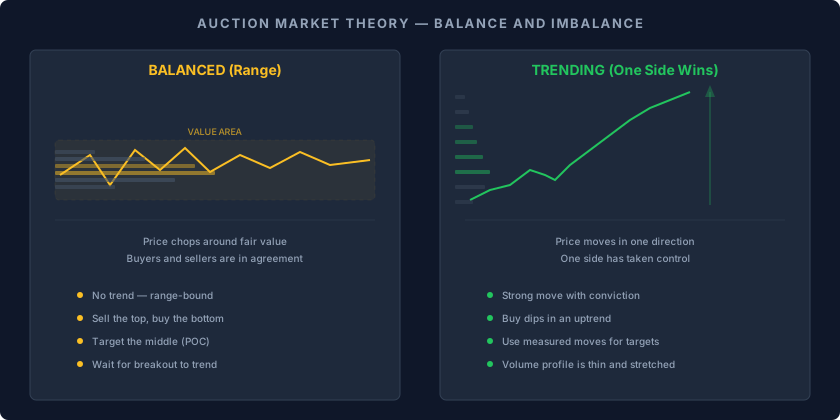
Balanced Markets (Choppy / Range-Bound)
A balanced market goes sideways. Price bounces between a ceiling (VAHDefinitionValue Area High — the upper boundary of the zone where 70% of volume traded. Acts as resistance. — Value Area HighDefinitionThe top of the Value Area — the highest price in the zone where 70% of volume traded.) and a floor (VALDefinitionValue Area Low — the lower boundary of the zone where 70% of volume traded. Acts as support. — Value Area LowDefinitionThe bottom of the Value Area — the lowest price in the zone where 70% of volume traded.). The volume profile — a chart showing where the most trading happened — looks like a bell curve: lots of volume in the middle, very little at the edges.
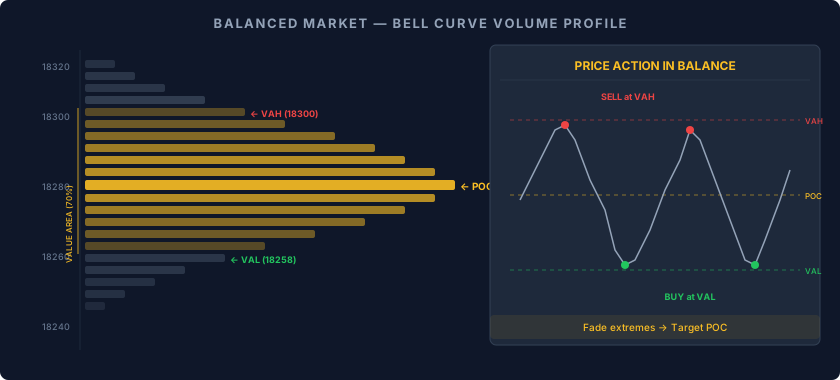
How to spot a balanced market:
- Price keeps bouncing between the same high and low levels
- Most of the volume is clustered in the middle of the range (at the POCDefinitionPoint of Control — the price with the highest volume. Where the most trading happened.)
- Delta (buying vs selling pressure) keeps flipping back and forth — no clear winner
- No pattern of higher highs or lower lows
How to trade it:
- Sell near the top of the range (VAHDefinitionValue Area High — the upper boundary of the zone where 70% of volume traded. Acts as resistance.), buy near the bottom (VALDefinitionValue Area Low — the lower boundary of the zone where 70% of volume traded. Acts as support.)
- Target the middle of the range (POCDefinitionPoint of Control — the price with the highest volume. Where the most trading happened.) for your exit
- Do not chase breakouts — most breakout attempts in a range fail and snap back
- Wait for a real break of the range before switching to trend-following
Trending Markets (One Side in Control)
A trending market moves in one direction. Buyers or sellers have taken control, and price makes a sustained move. The volume profile looks thin and stretched — spreadDefinitionThe gap between the bid and ask price. Usually 1 tick on active contracts during RTH. Wider spread = more expensive to trade. across many price levels instead of concentrated in one spot.
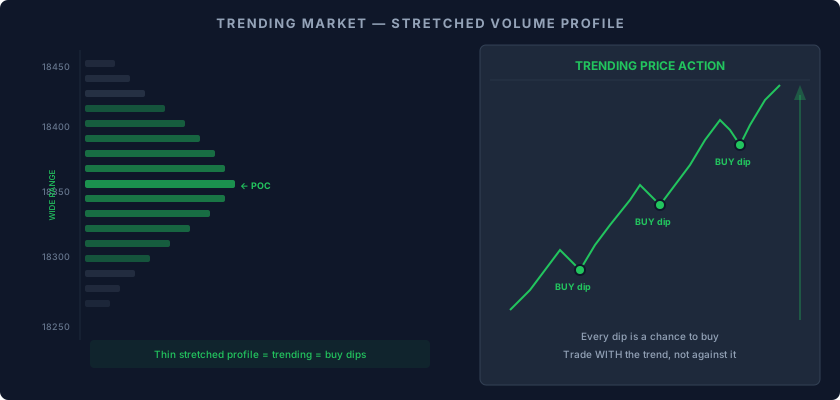
How to spot a trending market:
- Price makes higher highs and higher lows (uptrend) or lower highs and lower lows (downtrend)
- Volume is spreadDefinitionThe gap between the bid and ask price. Usually 1 tick on active contracts during RTH. Wider spread = more expensive to trade. across a wide price range instead of clustered at one level
- Delta stays positive (uptrend) or negative (downtrend) for extended periods
- Stacked imbalancesDefinition3+ consecutive price levels where one side overwhelms the other by 3:1. Marks institutional zones. appear on the footprint chartDefinitionA chart showing bid and ask volume at every price inside each candle. Reveals who is buying and selling. in the direction of the trend
How to trade it:
- Trade with the trend, not against it
- Buy dips in an uptrend, sell rallies in a downtrend
- Use measured movesDefinitionA price projection where Leg B equals Leg A. Halsey's primary target is the -23.6% extension beyond 100%. to set your profit target
- The impulse legDefinitionA sharp, fast move that establishes the trend direction. The big candles. Don't chase these — wait for the pullback. (the big move) tells you the direction. The correction legDefinitionThe pullback after an impulse move. Slower and choppier. This is where the entry opportunity is. (the pullback) gives you the entry
The Transition: From Choppy to Trending
The best trades happen right when the market shifts from balance to trending. The range compresses like a spring, and the breakout releases that energy into a big move.
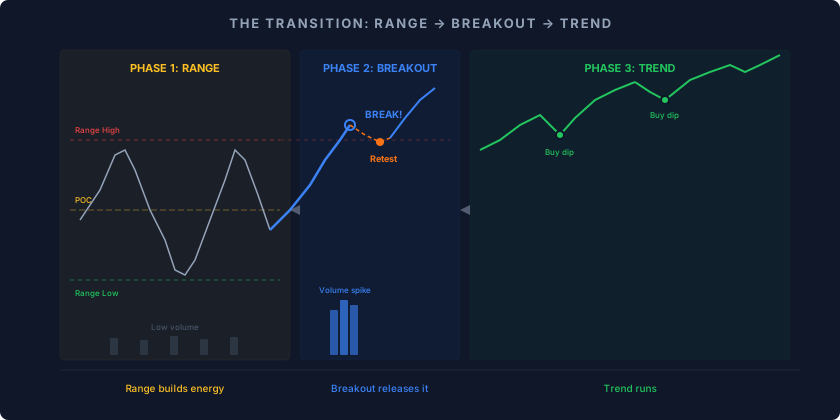
How to spot the shift:
- Volume spikes on the breakout candle — the range was quiet, then suddenly a big burst of volume pushes price through the ceiling or floor
- Stacked imbalancesDefinition3+ consecutive price levels where one side overwhelms the other by 3:1. Marks institutional zones. form at the breakout level — big players are putting real money behind the break
- Delta surges in one direction — cumulative deltaDefinitionRunning total of buying vs selling across the session. Shows who has been in control overall. that was flat during the range suddenly ramps up (or down)
- The retest holds — price breaks out, pulls back to test the old range boundary, and then continues in the breakout direction. This pullback is your entry
The breakout from a range is one of the best setups in futures trading. The range compressed the spring. The breakout released it. The pullback confirms it. Enter on the pullback with the measured moveDefinitionA price projection where Leg B equals Leg A. Halsey's primary target is the -23.6% extension beyond 100%. of the range as your target.