
The Power of 3
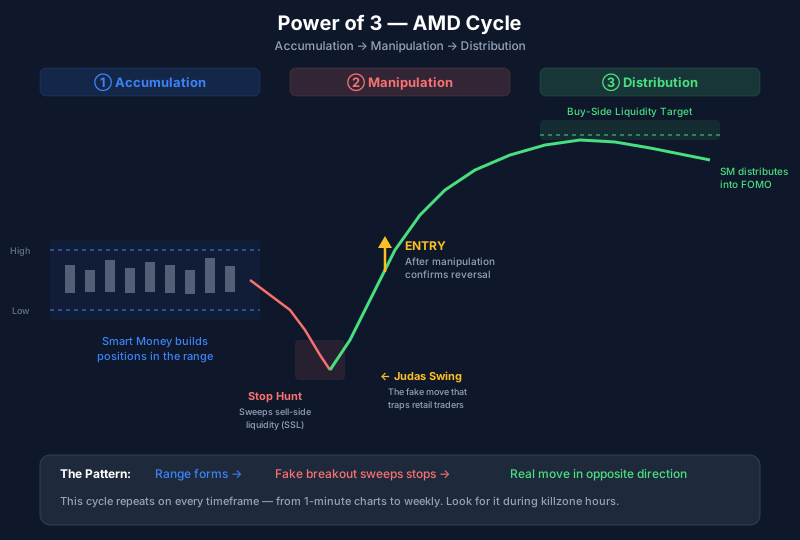
The Power of 3DefinitionAccumulation → Manipulation → Distribution. The three-phase cycle that structures every institutional move. (also called AMD — AccumulationDefinitionPhase 1 of Power of 3. Price consolidates while Smart Money quietly builds positions., ManipulationDefinitionPhase 2 of Power of 3. Fake breakout that sweeps liquidity — the Judas Swing., DistributionDefinitionPhase 3 of Power of 3. The real move — Smart Money distributes into retail momentum.) is the ICT framework for understanding how every significant move is structured. It describes the three phases that repeat on every timeframe, from 1-minute charts to weekly.
Phase 1: Accumulation
During accumulationDefinitionPhase 1 of Power of 3. Price consolidates while Smart Money quietly builds positions., price trades in a range. This looks like consolidation on a chart — tight candles, low volatility, no clear direction. But inside this range, Smart MoneyDefinitionInstitutional traders — banks, hedge funds, market makers — with the capital to move markets. is quietly building positions.
They buy at the bottom of the range and sell at the top, accumulating a large position over time without moving the market. The range itself creates liquidityDefinitionResting orders (stop losses, limit orders) at known levels. Institutions need liquidity to fill large positions. on both sides — buy stops above the range high and sell stops below the range low.
Phase 2: Manipulation
This is where the trap is sprung. Price breaks out of the accumulationDefinitionPhase 1 of Power of 3. Price consolidates while Smart Money quietly builds positions. range — but in the wrong direction. If Smart MoneyDefinitionInstitutional traders — banks, hedge funds, market makers — with the capital to move markets. is accumulating longs, the manipulationDefinitionPhase 2 of Power of 3. Fake breakout that sweeps liquidity — the Judas Swing. phase will break below the range to sweep sell-side liquidityDefinitionStop losses from longs sitting below equal lows. Institutions sweep these to fill buy orders..
This is the Judas SwingDefinitionA deceptive move during London that sweeps liquidity before the real daily move begins.. It does three things: 1. Triggers stop losses from traders who bought during accumulationDefinitionPhase 1 of Power of 3. Price consolidates while Smart Money quietly builds positions. 2. Induces new short sellers who think the range broke down 3. Provides Smart MoneyDefinitionInstitutional traders — banks, hedge funds, market makers — with the capital to move markets. with a massive pool of sell orders to buy from
Phase 3: Distribution
After manipulationDefinitionPhase 2 of Power of 3. Fake breakout that sweeps liquidity — the Judas Swing. sweeps the liquidityDefinitionResting orders (stop losses, limit orders) at known levels. Institutions need liquidity to fill large positions., price reverses sharply in the true direction. This is the expansion — the real move. Smart MoneyDefinitionInstitutional traders — banks, hedge funds, market makers — with the capital to move markets. is now distributing their accumulated position into the momentum of retail traders who are chasing.
The distributionDefinitionPhase 3 of Power of 3. The real move — Smart Money distributes into retail momentum. phase typically targets the opposite liquidityDefinitionResting orders (stop losses, limit orders) at known levels. Institutions need liquidity to fill large positions. pool. If manipulationDefinitionPhase 2 of Power of 3. Fake breakout that sweeps liquidity — the Judas Swing. swept sell-side liquidityDefinitionStop losses from longs sitting below equal lows. Institutions sweep these to fill buy orders. (below the range), distribution targets buy-side liquidityDefinitionStop losses from shorts sitting above equal highs. Institutions sweep these to fill sell orders. (above the range high and beyond).
The entire cycle — accumulationDefinitionPhase 1 of Power of 3. Price consolidates while Smart Money quietly builds positions., manipulationDefinitionPhase 2 of Power of 3. Fake breakout that sweeps liquidity — the Judas Swing., distributionDefinitionPhase 3 of Power of 3. The real move — Smart Money distributes into retail momentum. — often plays out within a single killzoneDefinitionTime windows when institutions are most active: London Open (2-5am ET), NY Open (7-10am ET). session. Asian session accumulates, London manipulates, New York distributes.
The Market Maker Model
The Market Maker ModelDefinitionPower of 3 applied to daily/weekly cycles. Identify range → wait for sweep → enter during expansion. is the Power of 3DefinitionAccumulation → Manipulation → Distribution. The three-phase cycle that structures every institutional move. applied to a full daily or weekly cycle:
- Identify the range (previous day's range, previous week's range, or Asian session range)
- Wait for the manipulationDefinitionPhase 2 of Power of 3. Fake breakout that sweeps liquidity — the Judas Swing. (liquidity sweepDefinitionPrice pushes beyond a key level to trigger stops, then reverses. The signature of institutional activity. of one side of the range during London)
- Enter on confirmation (reversal signals during NY OpenDefinition7-10am ET killzone. Highest volume session — where the real expansion move happens. — order blockDefinitionThe last opposing candle before an impulse move. Where the institutional order that started the move originated. reaction, FVGDefinitionFair Value Gap — a three-candle pattern where the wick of Candle 1 doesn't overlap with the wick of Candle 3. Price tends to return to fill these gaps. fill, deltaDefinitionAsk volume minus bid volume. Positive = more buying. Negative = more selling. Shows who is more aggressive. shift on the footprint)
- Target the opposite liquidityDefinitionResting orders (stop losses, limit orders) at known levels. Institutions need liquidity to fill large positions. (if the sweep was below the range, target buy-side above)
Putting It All Together
The Power of 3DefinitionAccumulation → Manipulation → Distribution. The three-phase cycle that structures every institutional move. connects every ICT concept:
- LiquidityDefinitionResting orders (stop losses, limit orders) at known levels. Institutions need liquidity to fill large positions. tells you where the sweep targets are
- KillzonesDefinitionTime windows when institutions are most active: London Open (2-5am ET), NY Open (7-10am ET). tell you when each phase will occur
- Order blocksDefinitionThe last opposing candle before an impulse move. Where the institutional order that started the move originated. and FVGsDefinitionFair Value Gap — a three-candle pattern where the wick of Candle 1 doesn't overlap with the wick of Candle 3. Price tends to return to fill these gaps. give you the entry zones during distributionDefinitionPhase 3 of Power of 3. The real move — Smart Money distributes into retail momentum.
- The footprint confirms institutional presence at those levels
A complete ICT trade looks like this: 1. Asian session forms a range (accumulationDefinitionPhase 1 of Power of 3. Price consolidates while Smart Money quietly builds positions.) 2. London sweeps below the Asian low (manipulationDefinitionPhase 2 of Power of 3. Fake breakout that sweeps liquidity — the Judas Swing. / Judas SwingDefinitionA deceptive move during London that sweeps liquidity before the real daily move begins.) 3. Your footprint shows absorptionDefinitionHeavy aggressive orders hit a level but price doesn't move — a large passive player is absorbing the flow. at a bullish order blockDefinitionThe last opposing candle before an impulse move. Where the institutional order that started the move originated. aligned with an FVGDefinitionFair Value Gap — a three-candle pattern where the wick of Candle 1 doesn't overlap with the wick of Candle 3. Price tends to return to fill these gaps. 4. You enter long during NY OpenDefinition7-10am ET killzone. Highest volume session — where the real expansion move happens. (distributionDefinitionPhase 3 of Power of 3. The real move — Smart Money distributes into retail momentum. phase begins) 5. You target the Asian high, then buy-side liquidityDefinitionStop losses from shorts sitting above equal highs. Institutions sweep these to fill sell orders. above it
That is the ICT framework in action — time, price, liquidityDefinitionResting orders (stop losses, limit orders) at known levels. Institutions need liquidity to fill large positions., and order flow all aligned. It is not magic. It is understanding the game that institutions play, and positioning yourself on the right side of it.