
The Measured Move Framework
A measured moveDefinitionA price projection where Leg B equals Leg A. Halsey's primary target is the -23.6% extension beyond 100%. is the observation that price legs tend to repeat in size. When an impulse legDefinitionA sharp, fast move that establishes the trend direction. The big candles. Don't chase these — wait for the pullback. covers 180 points, the next impulse leg after a correction tends to cover approximately 180 points. This is not a guarantee — it is a probability framework that gives you objective targets.
This concept comes from David Halsey's Trading the Measured Move — a must-read if you trade index futures. He figured out that algo-driven markets create repeatable wave patterns you can measure and project with Fibonacci levels.
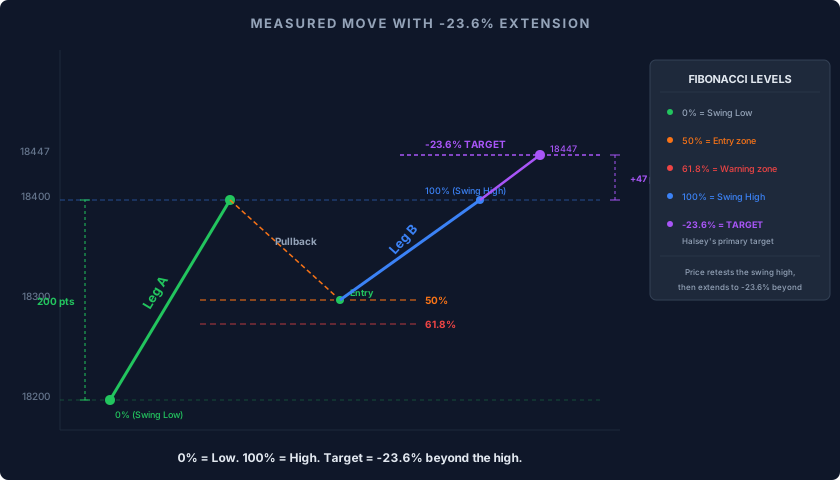
How It Works
The Fibonacci levels map to the swing:
- 0% = Swing LowDefinitionA trough on the chart where price reversed higher. Marks where buyers previously overpowered sellers. (where the move started)
- 50% = Midpoint (the entry zone)
- 61.8% = Warning zone (if price gets here, the setup is weaker)
- 100% = Swing HighDefinitionA peak on the chart where price reversed lower. Marks where sellers previously overpowered buyers. (where the move ended)
- -23.6% = Target (extends 23.6% beyond the swing highDefinitionA peak on the chart where price reversed lower. Marks where sellers previously overpowered buyers.)
Step by step:
- Identify the swing — mark the swing lowDefinitionA trough on the chart where price reversed higher. Marks where buyers previously overpowered sellers. (0%) and swing highDefinitionA peak on the chart where price reversed lower. Marks where sellers previously overpowered buyers. (100%)
- Wait for the correction — price pulls back toward the 50% level
- Enter at the 50% zone — this is your buy (or sell in a bearish move)
- Target the -23.6% extension — price retests the swing highDefinitionA peak on the chart where price reversed lower. Marks where sellers previously overpowered buyers. and pushes beyond it
Example 1 — NQ Bullish Measured Move
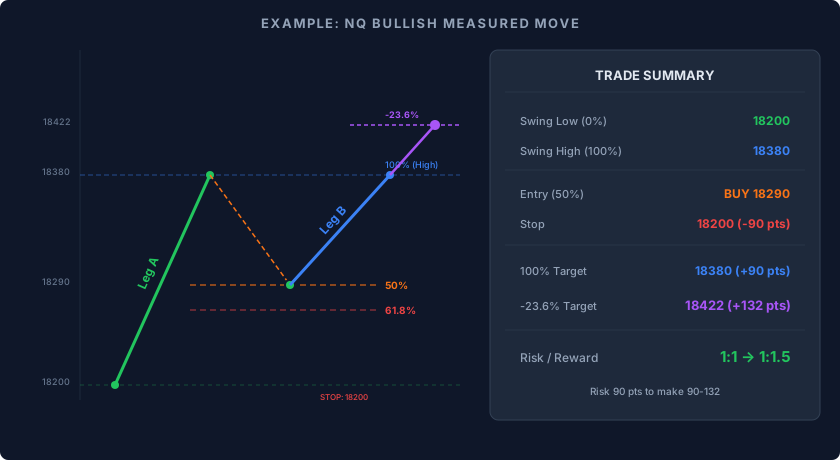
- NQDefinitionE-mini Nasdaq 100 futures contract. Known for fast, volatile moves. 1 tick = $5, 1 point = $20. swing lowDefinitionA trough on the chart where price reversed higher. Marks where buyers previously overpowered sellers. (0%): 18200. Swing highDefinitionA peak on the chart where price reversed lower. Marks where sellers previously overpowered buyers. (100%): 18380
- Price corrects to the 50% level: 18290
- You buy at 18290, stop below the swing lowDefinitionA trough on the chart where price reversed higher. Marks where buyers previously overpowered sellers. at 18200
- 100% target: price retests the swing highDefinitionA peak on the chart where price reversed lower. Marks where sellers previously overpowered buyers. at 18380
- -23.6% target: price extends to 18422 (+42 points beyond the high)
Example 2 — ES Bearish Measured Move
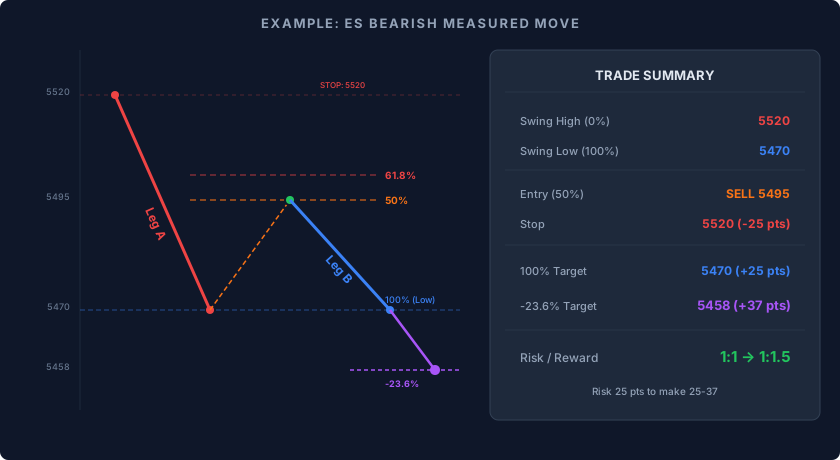
- ESDefinitionE-mini S&P 500 futures contract. Tracks the S&P 500 index. 1 tick = $12.50, 1 point = $50. Most heavily traded index future. swing highDefinitionA peak on the chart where price reversed lower. Marks where sellers previously overpowered buyers. (0%): 5520. Swing lowDefinitionA trough on the chart where price reversed higher. Marks where buyers previously overpowered sellers. (100%): 5470
- Price corrects up to the 50% level: 5495
- You sell at 5495, stop above the swing highDefinitionA peak on the chart where price reversed lower. Marks where sellers previously overpowered buyers. at 5520
- 100% target: price retests the swing lowDefinitionA trough on the chart where price reversed higher. Marks where buyers previously overpowered sellers. at 5470
- -23.6% target: price extends to 5458 (-12 points beyond the low)
Measured Move Targets
The 100% level is just the swing highDefinitionA peak on the chart where price reversed lower. Marks where sellers previously overpowered buyers. (or low in a short). The real question is: does price stop there or push beyond?
- 100% = the swing highDefinitionA peak on the chart where price reversed lower. Marks where sellers previously overpowered buyers. — price retests where the prior move ended. Many moves stop here
- -23.6% extension = Halsey's primary target — price pushes 23.6% of the swing range beyond the 100% level. On a 200-point swing, that is an extra 47 points past the high. In strong trends, this is where the move exhausts
- If price cannot reach the 100% level, the trend is weakening. Consider a conservative exit or waiting for a new swing to form
The Correction Entry Zone
The correction between Leg A and Leg B is where you enter. Halsey emphasizes the 50% retracement as the primary entry — not 61.8%:
- 50% retracement — Halsey's primary entry zone. Price has given back half the impulse. If buyers step back in here, the trend is healthy and the measured moveDefinitionA price projection where Leg B equals Leg A. Halsey's primary target is the -23.6% extension beyond 100%. is likely to play out
- 61.8% retracement — the golden pocketDefinitionThe 61.8% Fibonacci retracement zone — the most watched level. Corrections holding here produce strong continuations.. Still a valid entry, but Halsey treats this as the warning level. If price reaches 61.8%, the measured moveDefinitionA price projection where Leg B equals Leg A. Halsey's primary target is the -23.6% extension beyond 100%. is less reliable
- 78.6% retracement — the deep pullback. Requires additional confirmation (stacked imbalancesDefinition3+ consecutive price levels where one side overwhelms the other by 3:1. Marks institutional zones., positive deltaDefinitionAsk volume minus bid volume. Positive = more buying. Negative = more selling. Shows who is more aggressive.). The measured moveDefinitionA price projection where Leg B equals Leg A. Halsey's primary target is the -23.6% extension beyond 100%. may still work but at lower probability
The 61.8% Failure Setup
One of Halsey's most important contributions is the 61.8% failure concept. When price retraces past the 61.8% level of the prior impulse, the original measured moveDefinitionA price projection where Leg B equals Leg A. Halsey's primary target is the -23.6% extension beyond 100%. projection is weakened.
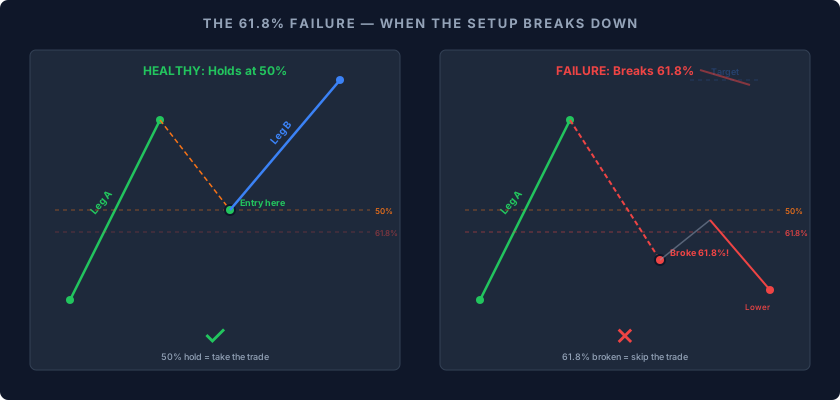
This signals:
- The trend may be losing momentum
- The correction is deeper than institutional buyers typically allow in strong trends
- A reversal or deeper correction is more likely than a continuation
- Consider reducing position size or waiting for a new swing to form before re-entering
Confirming with Order Flow
A measured moveDefinitionA price projection where Leg B equals Leg A. Halsey's primary target is the -23.6% extension beyond 100%. target alone is not enough to trade. Combine it with footprint data at the correction zone:
- Look for stacked buying imbalancesDefinitionA price level where one side overwhelms the other by 3:1 or more. Shows where big players committed. at the 50-61.8% zone — institutions defending the pullback
- Watch deltaDefinitionAsk volume minus bid volume. Positive = more buying. Negative = more selling. Shows who is more aggressive. — if cumulative deltaDefinitionRunning total of buying vs selling across the session. Shows who has been in control overall. is still rising during the correction, buyers are absorbing the selling
- Check absorptionDefinitionHeavy aggressive orders hit a level but price doesn't move — a large passive player is absorbing the flow. — heavy selling at the correction low that does not push price lower means a passive buyer is holding
The measured moveDefinitionA price projection where Leg B equals Leg A. Halsey's primary target is the -23.6% extension beyond 100%. gives you the target. The correction zone gives you the entry. The footprint confirms whether institutions are backing the trade. When all three align — that is the setup.