
Two Ways to Measure the Same Auction
Market ProfileDefinitionA chart format using TPO letters to show how long price traded at each level. Reveals the shape of the auction. (TPODefinitionTime Price Opportunity — a letter printed at each price level per 30-minute period on a Market Profile chart.) and Volume ProfileDefinitionA histogram showing total volume at each price level. The widest bar is the POC. Shows where the heaviest trading occurred. both analyze the same price auction, but they measure different things. Understanding when they agree and when they diverge is one of the most powerful edges in profile analysis.
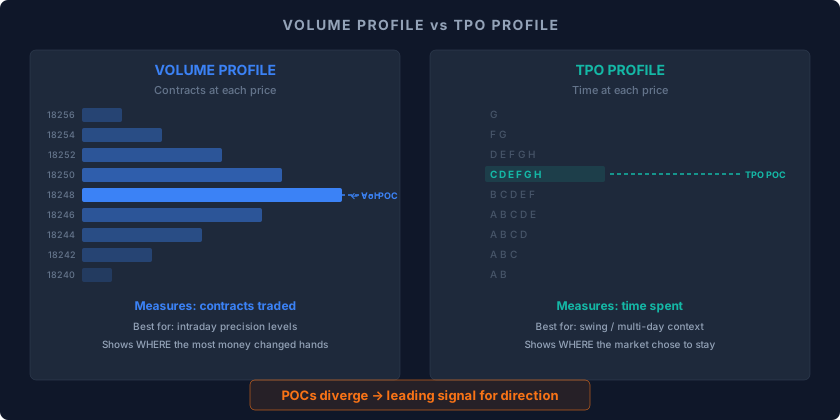
What Each Measures
- Market ProfileDefinitionA chart format using TPO letters to show how long price traded at each level. Reveals the shape of the auction. (TPODefinitionTime Price Opportunity — a letter printed at each price level per 30-minute period on a Market Profile chart.) — counts time at price. How many 30-minute periods touched each level. A price with 8 TPO letters had the market there for 4 hours
- Volume ProfileDefinitionA histogram showing total volume at each price level. The widest bar is the POC. Shows where the heaviest trading occurred. — counts contracts at price. How many contracts actually traded at each level. A price with 50,000 contracts had the most trading interest
- TPODefinitionTime Price Opportunity — a letter printed at each price level per 30-minute period on a Market Profile chart. POCDefinitionPoint of Control — the price with the highest volume. Where the most trading happened. — the price where the most time was spent
- Volume POCDefinitionPoint of Control — the price with the highest volume. Where the most trading happened. — the price where the most contracts traded
Time and volume are not the same thing. The market can spend 3 hours at a price but trade light volume (waiting). Or it can spend 10 minutes at a price and trade massive volume (initiative activity). The distinction tells you about conviction.
When They Agree
When the TPODefinitionTime Price Opportunity — a letter printed at each price level per 30-minute period on a Market Profile chart. POCDefinitionPoint of Control — the price with the highest volume. Where the most trading happened. and Volume POC are at the same price (or very close):
- Strong confirmation that the level is true fair value
- Both time and capital agree on where value is
- This level will act as a powerful magnet and reference point
- Expect strong reactions when price revisits this level
- Cross-reference with POC and Value Area for the full picture
When They Diverge
When the TPODefinitionTime Price Opportunity — a letter printed at each price level per 30-minute period on a Market Profile chart. POCDefinitionPoint of Control — the price with the highest volume. Where the most trading happened. and Volume POC are at different prices, pay attention:
- Volume POCDefinitionPoint of Control — the price with the highest volume. Where the most trading happened. above TPODefinitionTime Price Opportunity — a letter printed at each price level per 30-minute period on a Market Profile chart. POC — heavy volume traded at higher prices even though the market spent more time lower. Institutions were accumulating at higher levels. Bullish signal — value is likely migrating up
- Volume POCDefinitionPoint of Control — the price with the highest volume. Where the most trading happened. below TPODefinitionTime Price Opportunity — a letter printed at each price level per 30-minute period on a Market Profile chart. POC — heavy volume traded at lower prices even though the market spent more time higher. Institutions were distributing at lower levels. Bearish signal — value is likely migrating down
- Divergence is a leading signal — it often precedes the next session's directional move
When TPODefinitionTime Price Opportunity — a letter printed at each price level per 30-minute period on a Market Profile chart. and Volume disagree on fair value, follow the volume. Money talks louder than time. If institutions are committing capital at a different price than where the market is spending time, the market will eventually move to where the money is.
Which to Use When
- Intraday scalping and day trading — Volume ProfileDefinitionA histogram showing total volume at each price level. The widest bar is the POC. Shows where the heaviest trading occurred. is generally more useful because contracts traded is a more direct measure of institutional commitment on short timeframes
- Swing trading and multi-day analysis — TPODefinitionTime Price Opportunity — a letter printed at each price level per 30-minute period on a Market Profile chart. Profile adds value because time spent at price across multiple sessions reveals developing value areas and balance zones
- Best approach — use both. Volume ProfileDefinitionA histogram showing total volume at each price level. The widest bar is the POC. Shows where the heaviest trading occurred. for the primary levels, TPODefinitionTime Price Opportunity — a letter printed at each price level per 30-minute period on a Market Profile chart. Profile for context on how the market is accepting or rejecting those levels
- Combine with auction market theory to understand whether the market is in balance or trending
Do not pick one and ignore the other. Volume ProfileDefinitionA histogram showing total volume at each price level. The widest bar is the POC. Shows where the heaviest trading occurred. tells you where the money is. TPODefinitionTime Price Opportunity — a letter printed at each price level per 30-minute period on a Market Profile chart. tells you where the market is comfortable. Use both to get the complete picture of the auction.