
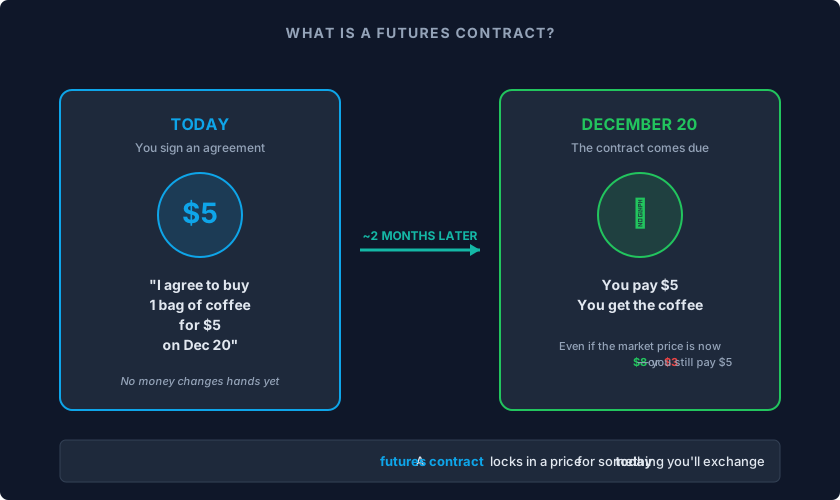
A futures contractDefinitionAn agreement to buy or sell something at a set price on a future date. The foundation of every futures trade. is an agreement to buy or sell something at a set price on a future date.
That's it. That's the whole idea.
An everyday example. Imagine it's October and you're worried coffee will get more expensive by Christmas. You find someone willing to lock in today's price of $5 per pound for delivery on December 20th. You both sign. That agreement is a futures contractDefinitionAn agreement to buy or sell something at a set price on a future date. The foundation of every futures trade..
Why Do Futures Exist?
They were invented for farmers. A corn farmer in spring doesn't know what corn will sell for in October. A futures contractDefinitionAn agreement to buy or sell something at a set price on a future date. The foundation of every futures trade. lets him lock in a price today — so he can plan his whole year around a number he can count on. The buyer (a cereal company, for example) also benefits: they know what they'll pay in October, so they can plan their costs.
Today, futures contractsDefinitionAn agreement to buy or sell something at a set price on a future date. The foundation of every futures trade. exist for almost anything that trades:
- Stock indexes — like the S&P 500DefinitionIndex of the 500 biggest U.S. companies — Apple, Microsoft, Amazon, etc. Traded as ES futures (or MES for the micro). (ESDefinitionE-mini S&P 500 futures contract. Tracks the S&P 500 index. 1 tick = $12.50, 1 point = $50. Most heavily traded index future.) and Nasdaq 100DefinitionIndex of the 100 biggest tech-heavy companies — Apple, Microsoft, Google, Nvidia. Traded as NQ futures (or MNQ for the micro). (NQDefinitionE-mini Nasdaq 100 futures contract. Known for fast, volatile moves. 1 tick = $5, 1 point = $20.)
- Crude oil, gold, silver
- Corn, soybeans, wheat, coffee
- The U.S. dollar and other currencies
Most people trading futures today are not actual farmers or airlines. They are speculatorsDefinitionTraders who buy and sell futures to profit from price moves (not because they need the physical product). Most futures volume today is speculative. — traders trying to profit from price moves. That is a normal, legal, and huge part of the market.
What Is a Stock Index? (And Why They Matter)
You have probably heard "the S&P was up today" or "Nasdaq hit a new high." But what actually IS the S&P? What IS the Nasdaq?
An Index Is a Group of Stocks Tracked Together
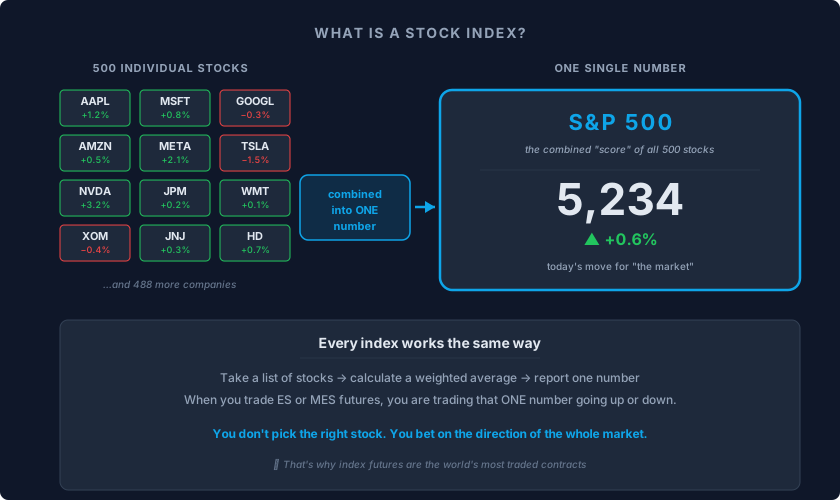
An indexDefinitionA list of stocks tracked together as one number. The S&P 500 is an index of 500 companies. is simply a list of stocks tracked together as a single number. Think of it like a scoreboard for a team — the number represents how the whole group is doing, not any single stock.
When you hear "the S&P 500DefinitionIndex of the 500 biggest U.S. companies — Apple, Microsoft, Amazon, etc. Traded as ES futures (or MES for the micro). is at 5,200" — that number is not the price of any one stock. It is a calculated number that represents the combined performance of all 500 stocks in the index.
The Three Big U.S. Stock Indexes
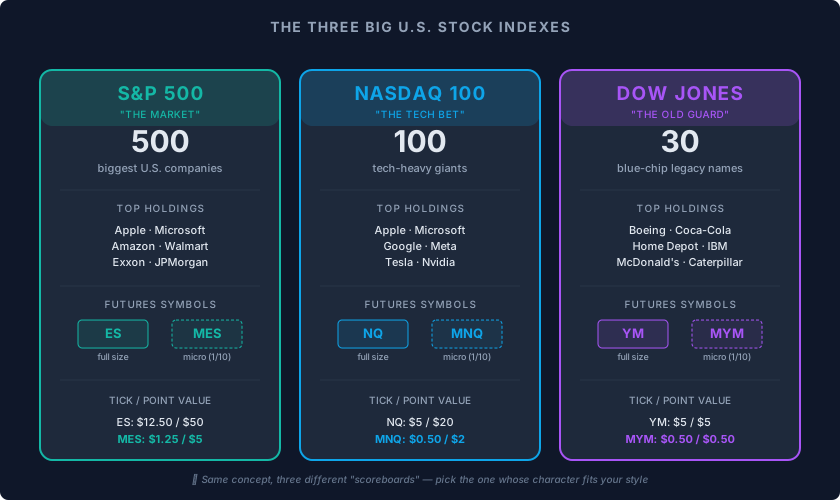
Three indexes dominate the financial news (and most futures trading):
- S&P 500DefinitionIndex of the 500 biggest U.S. companies — Apple, Microsoft, Amazon, etc. Traded as ES futures (or MES for the micro). — the 500 biggest companies in America: Apple, Microsoft, Amazon, Walmart, Exxon, and many more. When people say "the market was up today," they usually mean the S&P 500. Futures symbol: ESDefinitionE-mini S&P 500 futures contract. Tracks the S&P 500 index. 1 tick = $12.50, 1 point = $50. Most heavily traded index future. (or MESDefinitionMicro E-mini S&P 500 — 1/10th the size of ES. 1 tick = $1.25, 1 point = $5. Recommended starter contract for beginners. for the micro version)
- Nasdaq 100DefinitionIndex of the 100 biggest tech-heavy companies — Apple, Microsoft, Google, Nvidia. Traded as NQ futures (or MNQ for the micro). — the 100 biggest tech-heavy companies: Apple, Microsoft, Google, Meta, Tesla, Nvidia. It moves faster and more dramatically than the S&P because it is concentrated in tech. Futures symbol: NQDefinitionE-mini Nasdaq 100 futures contract. Known for fast, volatile moves. 1 tick = $5, 1 point = $20. (or MNQDefinitionMicro E-mini Nasdaq 100 — 1/10th the size of NQ. 1 tick = $0.50, 1 point = $2. Fast moves, beginner-sized risk.)
- Dow JonesDefinitionIndex of 30 large American companies (Boeing, Coca-Cola, Home Depot). Traded as YM futures (or MYM for the micro). Industrial Average — 30 large American companies (Boeing, Coca-Cola, Home Depot, McDonald's). Older and narrower than the S&P. Futures symbol: YMDefinitionE-mini Dow Jones futures contract. Less volatile than ES/NQ. 1 tick = $5, 1 point = $5. (or MYMDefinitionMicro E-mini Dow — 1/10th the size of YM. 1 tick = $0.50, 1 point = $0.50. Smallest-dollar-value micro.)
There is also the Russell 2000DefinitionIndex of 2,000 smaller U.S. companies (small-caps). Traded as RTY futures (or M2K for the micro). — a group of 2,000 smaller U.S. companies. Futures symbol: RTYDefinitionE-mini Russell 2000 futures contract. Tracks small-cap U.S. stocks. 1 tick = $5, 1 point = $50. (or M2KDefinitionMicro E-mini Russell 2000 — 1/10th the size of RTY. Tracks small-cap U.S. stocks. for the micro).
Why Traders Love Index Futures
You do not have to pick the right individual stock. You are betting on the direction of the whole market at once.
- Think the economy is strong? Buy (go long) index futures.
- Think tech is about to sell off? Short the Nasdaq futures.
This is one reason ESDefinitionE-mini S&P 500 futures contract. Tracks the S&P 500 index. 1 tick = $12.50, 1 point = $50. Most heavily traded index future. and NQDefinitionE-mini Nasdaq 100 futures contract. Known for fast, volatile moves. 1 tick = $5, 1 point = $20. are among the most-traded futures contractsDefinitionAn agreement to buy or sell something at a set price on a future date. The foundation of every futures trade. in the world. They are how professionals trade "the market" as a single idea — one decision, one chart, one trade.
The Three Words You Need to Know
1. Contract
A contract is one unit of a futures trade. When people say "I'm long 2 contracts of NQDefinitionE-mini Nasdaq 100 futures contract. Known for fast, volatile moves. 1 tick = $5, 1 point = $20.," they mean they own 2 agreements to buy the Nasdaq at a set price.
2. Tick
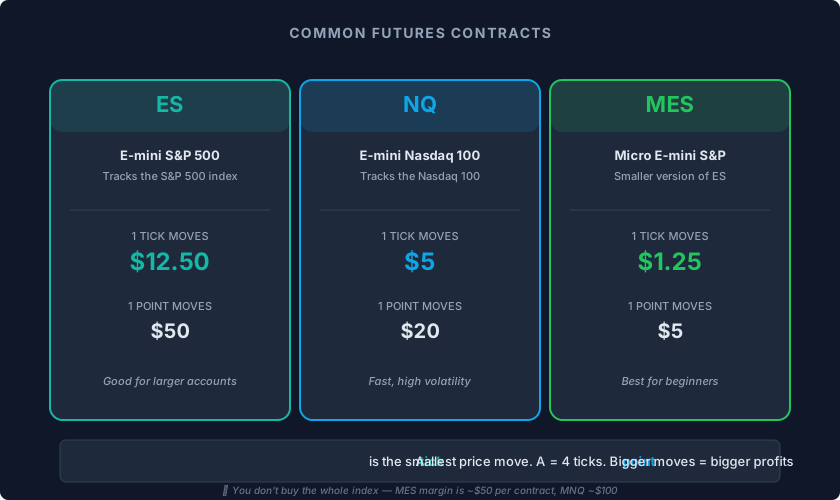
A tick is the smallest amount price can move. Every contract has its own tick size and tick value.
- On the E-miniDefinitionA smaller electronic version of a full-size futures contract. ES, NQ, and YM are all E-minis. S&P 500DefinitionIndex of the 500 biggest U.S. companies — Apple, Microsoft, Amazon, etc. Traded as ES futures (or MES for the micro). (ESDefinitionE-mini S&P 500 futures contract. Tracks the S&P 500 index. 1 tick = $12.50, 1 point = $50. Most heavily traded index future.), one tick is $12.50
- On the E-miniDefinitionA smaller electronic version of a full-size futures contract. ES, NQ, and YM are all E-minis. Nasdaq 100DefinitionIndex of the 100 biggest tech-heavy companies — Apple, Microsoft, Google, Nvidia. Traded as NQ futures (or MNQ for the micro). (NQDefinitionE-mini Nasdaq 100 futures contract. Known for fast, volatile moves. 1 tick = $5, 1 point = $20.), one tick is $5
- On the Micro E-miniDefinitionA smaller electronic version of a full-size futures contract. ES, NQ, and YM are all E-minis. S&P (MESDefinitionMicro E-mini S&P 500 — 1/10th the size of ES. 1 tick = $1.25, 1 point = $5. Recommended starter contract for beginners.), one tick is $1.25
3. Point
A point is simply a bigger price move made of multiple ticks. On ESDefinitionE-mini S&P 500 futures contract. Tracks the S&P 500 index. 1 tick = $12.50, 1 point = $50. Most heavily traded index future. and NQDefinitionE-mini Nasdaq 100 futures contract. Known for fast, volatile moves. 1 tick = $5, 1 point = $20., one point = 4 ticks. So:
- 1 point on ESDefinitionE-mini S&P 500 futures contract. Tracks the S&P 500 index. 1 tick = $12.50, 1 point = $50. Most heavily traded index future. = 4 ticks × $12.50 = $50
- 1 point on NQDefinitionE-mini Nasdaq 100 futures contract. Known for fast, volatile moves. 1 tick = $5, 1 point = $20. = 4 ticks × $5 = $20
What "Long" and "Short" Mean
Two more words every trader uses:
- Long = you bought a contract. You profit if price goes up.
- Short = you sold a contract. You profit if price goes down.
In futures, going short is just as easy as going long. You are not borrowing shares like with stocks — the contract itself works in both directions. This is a big reason traders choose futures.
You profit from direction, not from the company doing well. That is a very different mindset than buying stocks.
Bid and Ask — the Two Prices Every Market Has
At any moment, the market has two prices, not one.
- Bid = the highest price someone is willing to pay to BUY right now
- Ask = the lowest price someone is willing to accept to SELL right now
If you want to sell, you sell at the bidDefinitionThe highest price someone is currently willing to pay to buy. If you sell at market, this is what you get. (whatever buyers are currently willing to pay). If you want to buy, you buy at the askDefinitionThe lowest price someone is currently willing to sell at. If you buy at market, this is what you pay. (whatever sellers are currently willing to accept).
The gap between them is called the spreadDefinitionThe gap between the bid and ask price. Usually 1 tick on active contracts during RTH. Wider spread = more expensive to trade..
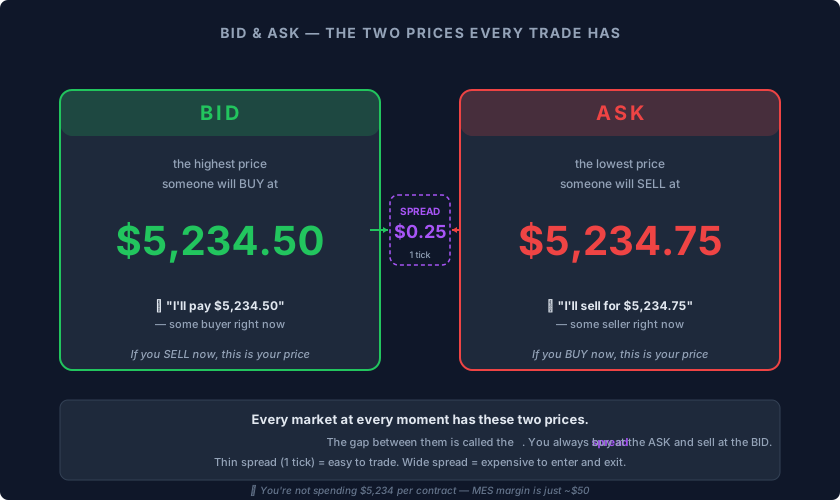
On active futures contractsDefinitionAn agreement to buy or sell something at a set price on a future date. The foundation of every futures trade. like ESDefinitionE-mini S&P 500 futures contract. Tracks the S&P 500 index. 1 tick = $12.50, 1 point = $50. Most heavily traded index future. and NQDefinitionE-mini Nasdaq 100 futures contract. Known for fast, volatile moves. 1 tick = $5, 1 point = $20. during regular hours, the spreadDefinitionThe gap between the bid and ask price. Usually 1 tick on active contracts during RTH. Wider spread = more expensive to trade. is usually just one tick (the smallest possible gap). That is the cheapest, easiest environment to trade. When spreads widen (during news, overnight, or on illiquid contracts), it costs more to get in and out.
The Three Orders You Will Use Every Day
Every trade starts with an order. There are three types every beginner needs to understand.
1. Market Order
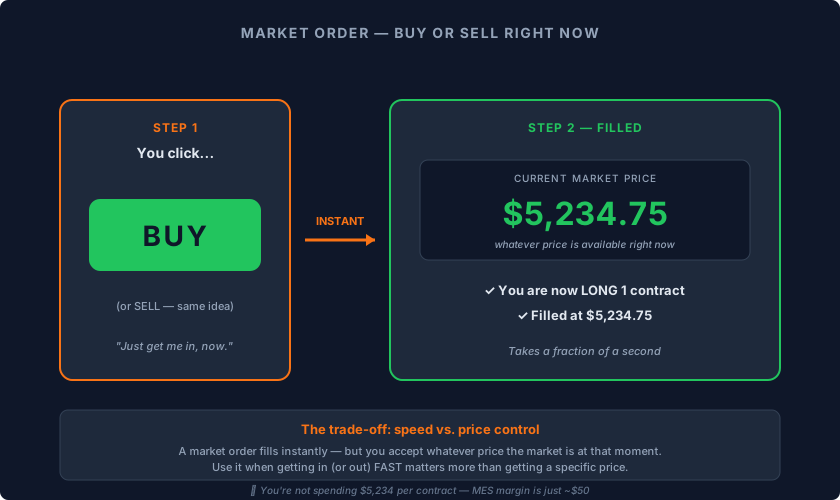
A market orderDefinitionAn order to buy or sell RIGHT NOW at whatever price is available. Fastest execution, but you take the current price. means: *"Buy or sell RIGHT NOW at whatever price is available."*
You click buy (or sell), your order fills instantly at the current bidDefinitionThe highest price someone is currently willing to pay to buy. If you sell at market, this is what you get. or askDefinitionThe lowest price someone is currently willing to sell at. If you buy at market, this is what you pay.. Fastest way in, fastest way out.
When to use it:
- You want in (or out) immediately
- The market is moving fast and you cannot wait
- The spreadDefinitionThe gap between the bid and ask price. Usually 1 tick on active contracts during RTH. Wider spread = more expensive to trade. is tight (one tick) so the price you get is basically what you see
The trade-off: you accept whatever price is there. In a fast market, the price when you click and the price you actually fill at can be different. This is called slippageDefinitionWhen your fill price differs from the price you saw. Common on market orders in fast markets..
2. Limit Order
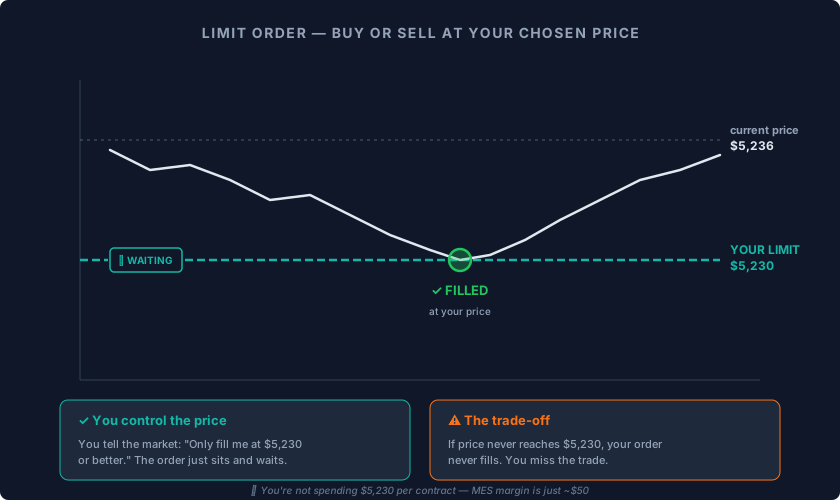
A limit orderDefinitionAn order that only fills at your chosen price (or better). Waits until the market reaches your price. means: *"Only fill me at this specific price — or better."*
You choose the exact price you want. The order sits and waits. If the market reaches your price, you get filled. If it never gets there, your order never fills.
When to use it:
- You want a specific price, not whatever is currently available
- You are not in a rush
- You want to enter on a pullback to a key level (place the limit at the level and wait)
The trade-off: the market may never reach your price. If price rips the direction you wanted without touching your limit, you miss the trade entirely.
3. Stop Loss
A stop lossDefinitionAn automatic exit order. If price moves against you to a preset level, the trade closes automatically. Every trade needs one. is an automatic exit order. It is the single most important tool in your entire trading toolkit.
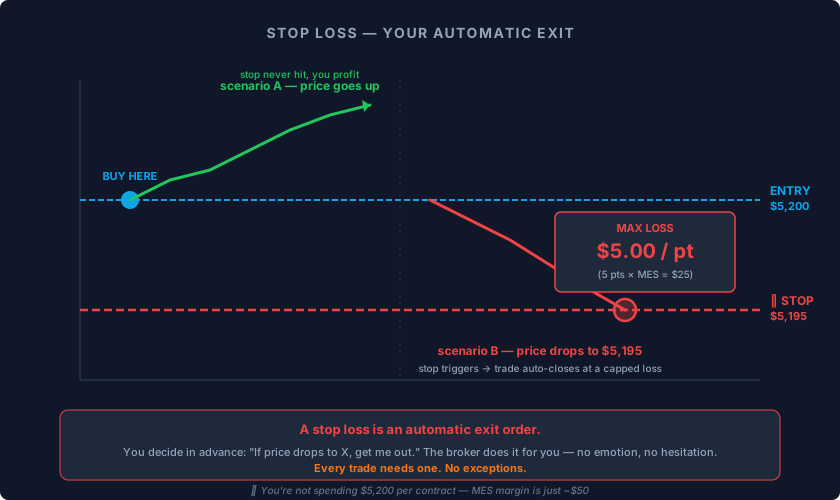
When you enter a trade, you also tell your broker: *"If price moves against me by X, close the trade automatically."* That automatic exit is your stop lossDefinitionAn automatic exit order. If price moves against you to a preset level, the trade closes automatically. Every trade needs one..
How it works:
- You are long ESDefinitionE-mini S&P 500 futures contract. Tracks the S&P 500 index. 1 tick = $12.50, 1 point = $50. Most heavily traded index future. at $5,200. You place a stop lossDefinitionAn automatic exit order. If price moves against you to a preset level, the trade closes automatically. Every trade needs one. at $5,195.
- If price goes up → your stop never triggers. You keep the trade open.
- If price drops to $5,195 → the broker automatically closes your trade at that price. Your loss is capped at 5 points.
Without a stop lossDefinitionAn automatic exit order. If price moves against you to a preset level, the trade closes automatically. Every trade needs one., a losing trade can keep going and going. Traders have blown up their entire accounts on a single position that "had to come back." A stop loss removes that danger completely — you decide the worst-case loss before you enter, not during.
Never place a trade without a stop lossDefinitionAn automatic exit order. If price moves against you to a preset level, the trade closes automatically. Every trade needs one.. Ever. This is the #1 rule every professional trader follows.
Start Small — Why Beginners Trade Micros
Before we wrap up, here is the single most important piece of advice for anyone new to futures:
Start with micro contractsDefinitionA futures contract 1/10th the size of its E-mini parent. MES, MNQ, MYM are all micros. Recommended for beginners..
Micros are smaller versions of their parent contracts. Same chart, same signals, same strategies — just smaller dollar values per move. The four popular ones:
- MESDefinitionMicro E-mini S&P 500 — 1/10th the size of ES. 1 tick = $1.25, 1 point = $5. Recommended starter contract for beginners. — Micro E-miniDefinitionA smaller electronic version of a full-size futures contract. ES, NQ, and YM are all E-minis. S&P 500DefinitionIndex of the 500 biggest U.S. companies — Apple, Microsoft, Amazon, etc. Traded as ES futures (or MES for the micro). → 1 tick = $1.25, 1 point = $5
- MNQDefinitionMicro E-mini Nasdaq 100 — 1/10th the size of NQ. 1 tick = $0.50, 1 point = $2. Fast moves, beginner-sized risk. — Micro E-miniDefinitionA smaller electronic version of a full-size futures contract. ES, NQ, and YM are all E-minis. Nasdaq 100DefinitionIndex of the 100 biggest tech-heavy companies — Apple, Microsoft, Google, Nvidia. Traded as NQ futures (or MNQ for the micro). → 1 tick = $0.50, 1 point = $2
- MYMDefinitionMicro E-mini Dow — 1/10th the size of YM. 1 tick = $0.50, 1 point = $0.50. Smallest-dollar-value micro. — Micro E-miniDefinitionA smaller electronic version of a full-size futures contract. ES, NQ, and YM are all E-minis. Dow → 1 tick = $0.50, 1 point = $0.50
- M2KDefinitionMicro E-mini Russell 2000 — 1/10th the size of RTY. Tracks small-cap U.S. stocks. — Micro E-miniDefinitionA smaller electronic version of a full-size futures contract. ES, NQ, and YM are all E-minis. Russell 2000DefinitionIndex of 2,000 smaller U.S. companies (small-caps). Traded as RTY futures (or M2K for the micro). → 1 tick = $0.50, 1 point = $5
At $5 per point on MESDefinitionMicro E-mini S&P 500 — 1/10th the size of ES. 1 tick = $1.25, 1 point = $5. Recommended starter contract for beginners., a 10-point move moves your P&L by $50. Small dollar values per tick = small learning cost.
Understanding Margin — The Biggest Beginner Misconception
You do not pay the index price. This is the single most important thing a beginner needs to understand. When you see MESDefinitionMicro E-mini S&P 500 — 1/10th the size of ES. 1 tick = $1.25, 1 point = $5. Recommended starter contract for beginners. trading at some big index number, you do not need that much money to buy one contract. The number on the chart is the index level — not the price you pay.
What you actually post is marginDefinitionThe amount your broker holds while you have a trade open. For MES, typically ~$50 per contract. Much less than the contract's full value. — usually ~$50 per MESDefinitionMicro E-mini S&P 500 — 1/10th the size of ES. 1 tick = $1.25, 1 point = $5. Recommended starter contract for beginners. contract during regular trading hoursDefinition9:30 AM to 4:00 PM ET — when the NYSE is open and most of the day's volume happens.. Your broker holds that margin while you are in the trade. That's it.
This is why futures are popular with active traders: you get exposure to the move of an entire index while only a small portion of your account is tied up.
How Professional Sizing Works
Knowing the mechanics of position sizing is the foundation of every long-term trading career. The core ideas:
- Risk per trade — the widely-cited professional guideline is to risk no more than 1–2% of your account on any single trade
- Always use a stop lossDefinitionAn automatic exit order. If price moves against you to a preset level, the trade closes automatically. Every trade needs one. — every trade has a pre-planned exit if it moves against you. No exceptions
- Reward-to-risk ratio — most traders target setups where the potential profit is at least 2× the risk
- Fewer trades, higher quality — 2 to 4 well-planned setups is plenty for most days
Most traders do not fail because the math is wrong. They fail because they take 15 impulse trades per day instead of 2 well-planned ones.
An Educational Trade Example
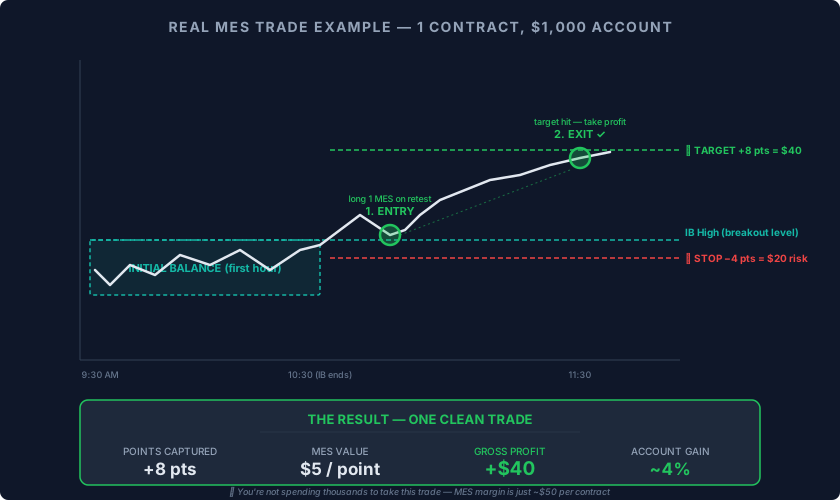
This section walks through the mechanics of one MESDefinitionMicro E-mini S&P 500 — 1/10th the size of ES. 1 tick = $1.25, 1 point = $5. Recommended starter contract for beginners. trade. It is an illustration of how entry, stop, and target relate to each other — not a projection of outcomes. Real trading involves losing trades too, and past setups do not guarantee future results.
The Setup
It is Monday, 10:45 AM ET. You are watching MESDefinitionMicro E-mini S&P 500 — 1/10th the size of ES. 1 tick = $1.25, 1 point = $5. Recommended starter contract for beginners.. During the first hour of RTHDefinitionRegular Trading Hours — 9:30 AM to 4:00 PM ET. Where 80-90% of daily futures volume happens. The main session traders focus on., price built an Initial BalanceDefinitionThe price range of the first hour (A + B periods). Narrow IB = trend day. Wide IB = range day. — the range between the first-hour high and low. At 10:45 AM, price breaks cleanly above the IB HighDefinitionInitial Balance High — the highest price reached in the first hour of RTH (9:30-10:30 AM ET)., then pulls back and holds that level as support.
This is a textbook IB breakout retest pattern.
The Trade Structure
- Entry: Buy 1 MESDefinitionMicro E-mini S&P 500 — 1/10th the size of ES. 1 tick = $1.25, 1 point = $5. Recommended starter contract for beginners. at the retest level (limit orderDefinitionAn order that only fills at your chosen price (or better). Waits until the market reaches your price.)
- Stop lossDefinitionAn automatic exit order. If price moves against you to a preset level, the trade closes automatically. Every trade needs one.: 4 points below entry — the pre-planned exit if the pattern fails
- Target: 8 points above entry — a 1:2 risk-to-reward structure
If the Trade Works
In this illustration, price grinds higher and reaches the target by 11:30 AM. The position closes at the pre-planned profit level.
The math on this hypothetical outcome:
- Points captured: 8
- MESDefinitionMicro E-mini S&P 500 — 1/10th the size of ES. 1 tick = $1.25, 1 point = $5. Recommended starter contract for beginners. value per point: $5
- Gross move: +$40
- After ~$3 in commissions: ~$37 net
And your broker only held ~$50 of marginDefinitionThe amount your broker holds while you have a trade open. For MES, typically ~$50 per contract. Much less than the contract's full value. while the trade was open.
If the Trade Fails
Not every trade wins. Many setups fail and hit the stop lossDefinitionAn automatic exit order. If price moves against you to a preset level, the trade closes automatically. Every trade needs one.. That is a normal part of trading.
In this same example, if price had broken below the retest level and hit the stop:
- Points lost: 4
- Gross loss: −$20
This is why the 1:2 risk-to-reward structure matters: a single winner pays for two losers, so your edge comes from taking quality setups consistently — not from winning every trade.
Why Discipline Matters More Than Math
The math on any single trade is simple. Doing it consistently is the hard part. Common pitfalls:
- Taking too many trades — more trades does not mean more profit. It usually means more losses
- Moving the stop — "I'll just give it a little more room" is how small losses become big ones
- Skipping the stop entirely — one bad trade without a stop can wipe out weeks of smaller wins
- Over-sizing — trading 5 contracts instead of 1 to "speed things up" usually speeds up the losses, not the wins
Professional traders share these habits:
- Trading only setups they have practiced extensively
- Taking the stop when a trade moves against them — without debate
- Taking the profit at a pre-planned target
- Walking away after their plan is done for the day
These rules sound boring. They are what separates traders from gamblers.
Common Mistakes Beginners Make
- Trading too big too soon — start with micros (MESDefinitionMicro E-mini S&P 500 — 1/10th the size of ES. 1 tick = $1.25, 1 point = $5. Recommended starter contract for beginners., MNQDefinitionMicro E-mini Nasdaq 100 — 1/10th the size of NQ. 1 tick = $0.50, 1 point = $2. Fast moves, beginner-sized risk.) where a full point costs $5, not $50
- Not using a stop-loss — every trade needs one. No exceptions.
- Treating it like gambling — futures is a skill game. You will lose money if you guess instead of waiting for setups you understand
- Ignoring the session times — not all hours are equally tradeable. The next lesson explains why