
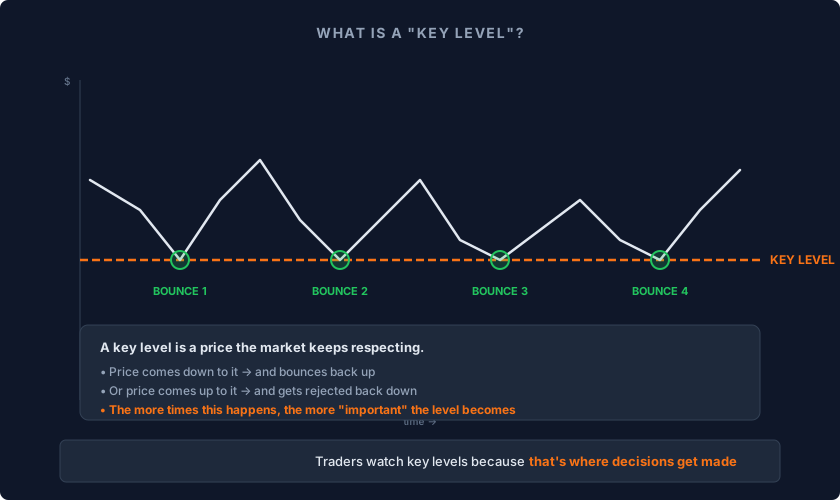
A key level is a price that the market has reacted to before — and is likely to react to again.
That's the whole concept. Nothing mystical, nothing hidden. Price has memory, and certain numbers on the chart matter more than others.
Why Does Price "Remember" Levels?
Think about it from the traders' point of view. Imagine yesterday the market dropped to a specific price — say $5,000 on the S&P 500DefinitionIndex of the 500 biggest U.S. companies — Apple, Microsoft, Amazon, etc. Traded as ES futures (or MES for the micro). — and then bounced hard. A lot of things happened at that price:
- Traders who were short at $5,000 took profits
- Traders who were long got stopped out
- New buyers stepped in, thinking it was cheap
- Algorithms that track levels flagged it
The next time price approaches $5,000, all of those people remember what happened last time. Some will buy again. Some will place stops just below. Some will take profits. And the collective weight of their decisions makes the level "active" again.
The level does not remember — people remember. And the market is people.
The Two Jobs of a Level
Every key level is either acting as support or resistance:
- Support = a price below the market that tends to stop drops. Buyers step in and push price back up
- Resistance = a price above the market that tends to stop rallies. Sellers step in and push price back down
That's it. A level either keeps price from falling through (support) or keeps price from rising through (resistance).
The Flip
Here is the twist every beginner needs to learn: once a level breaks, it often flips its role.
- A support level that breaks often becomes resistance on the way back up
- A resistance level that breaks often becomes support on the way back down
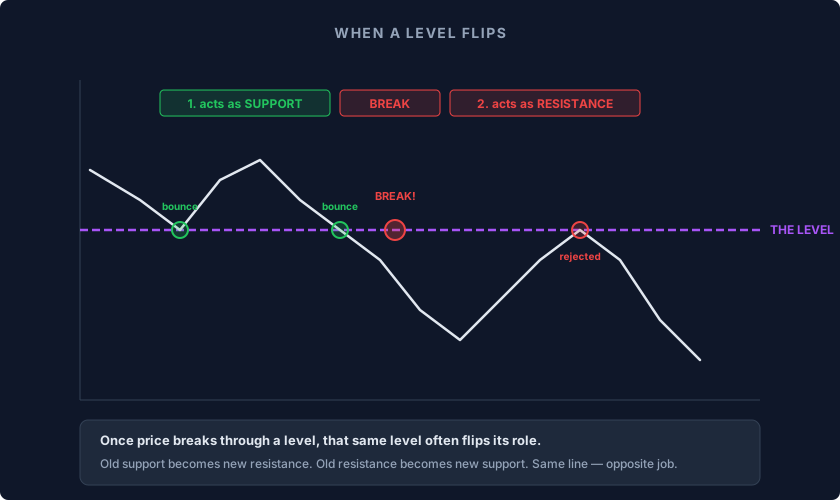
Why? Same reason as before — people remember. Traders who got stuck on the wrong side of the break are watching for a chance to get out at breakeven. That selling (or buying) pressure creates the flip.
Where Do Key Levels Come From?
You will learn specific levels in the next few lessons, but here is the preview. Most of the key levels traders watch are simple:
- Prior Day HighDefinitionThe highest price reached during yesterday's RTH session. Often acts as resistance when price approaches today. and Prior Day LowDefinitionThe lowest price reached during yesterday's RTH session. Often acts as support when price approaches today. — the highest and lowest prices from yesterday (covered next)
- PremarketDefinitionTrading before the 9:30 AM ET open. Light volume, but the highs and lows established here often matter once RTH begins. High and Premarket LowDefinitionThe lowest price reached during premarket trading (before 9:30 AM ET). — the highest and lowest prices during pre-market (covered next)
- Initial BalanceDefinitionThe price range of the first hour (A + B periods). Narrow IB = trend day. Wide IB = range day. High and Initial Balance Low — the highest and lowest of the first hour of RTHDefinitionRegular Trading Hours — 9:30 AM to 4:00 PM ET. Where 80-90% of daily futures volume happens. The main session traders focus on. (covered last)
- Round numbers — prices ending in 00 or 50 (like $5,000 or $15,500). Humans love round numbers
- Recent swing highsDefinitionA peak on the chart where price reversed lower. Marks where sellers previously overpowered buyers. and swing lowsDefinitionA trough on the chart where price reversed higher. Marks where buyers previously overpowered sellers. — the peaks and valleys from the last few sessions
That is 90 percent of what you need. You do not need dozens of lines on your chart. A few good ones, drawn correctly, are enough.
How to Use a Level
Here is a simple mental model:
- Mark the level on your chart (horizontal line)
- When price approaches, slow down and pay attention
- Watch whether price respects the level (bounces off) or breaks through it
- If it respects the level → there may be a trade *in the direction of the bounce*
- If it breaks through cleanly → there may be a trade *in the direction of the break*
- If it wobbles around the level without a clear decision → stay out, wait for the decision to be made
Levels are not magic buy or sell signals. They are decision points — places where the market has to choose a direction. Your job is to wait for the decision, not predict it.
Common Mistakes
- Drawing too many levels — a chart with 15 horizontal lines gives no information. Pick the 3 or 4 that matter for today
- Trading every touch — not every tag of a level leads to a bounce. Wait for confirmation
- Ignoring the bigger picture — a 1-minute swing lowDefinitionA trough on the chart where price reversed higher. Marks where buyers previously overpowered sellers. means much less than a daily key level
- Being rigid about exact prices — levels are zones, not single ticks. Give them a little room