
When Does the Futures Market Trade?
The futures market is almost always open. Not quite 24 hours, not quite 7 days a week, but close.
Here is the simple version:
- Monday through Friday — the market is open most of the day and night
- Sunday evening (6 PM ET) — the market reopens after the weekend
- Friday afternoon (5 PM ET) — the market closes for the weekend
- Every day from 5 PM to 6 PM ET — there is a one-hour maintenance break
But not all hours are equal. Most of the real action happens during a specific window — and that window is what you will focus on.
The Two Sessions
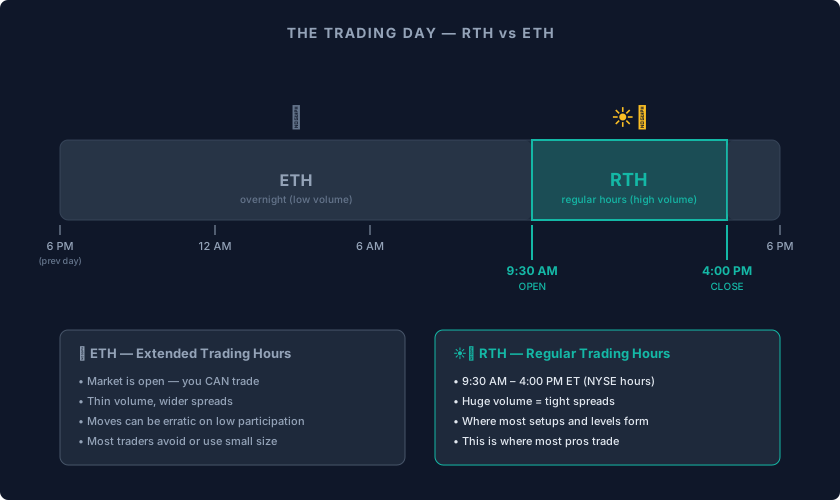
The trading day is split into two parts: RTHDefinitionRegular Trading Hours — 9:30 AM to 4:00 PM ET. Where 80-90% of daily futures volume happens. The main session traders focus on. and ETHDefinitionExtended Trading Hours — overnight and premarket sessions outside RTH. Market is open but volume is thin and moves can be erratic..
RTH — Regular Trading Hours
RTHDefinitionRegular Trading Hours — 9:30 AM to 4:00 PM ET. Where 80-90% of daily futures volume happens. The main session traders focus on. runs from 9:30 AM to 4:00 PM Eastern Time.
These are the same hours the New York Stock Exchange is open. The vast majority of volume, volatility, and setups happen during RTHDefinitionRegular Trading Hours — 9:30 AM to 4:00 PM ET. Where 80-90% of daily futures volume happens. The main session traders focus on..
ETH — Extended Trading Hours
ETHDefinitionExtended Trading Hours — overnight and premarket sessions outside RTH. Market is open but volume is thin and moves can be erratic. is everything else. The overnight session (after 4 PM the previous day through 9:30 AM the next morning) and the early pre-market hours.
The market is still open — you can trade — but the environment is very different.
Why RTH Matters So Much
The simple reason: volume.
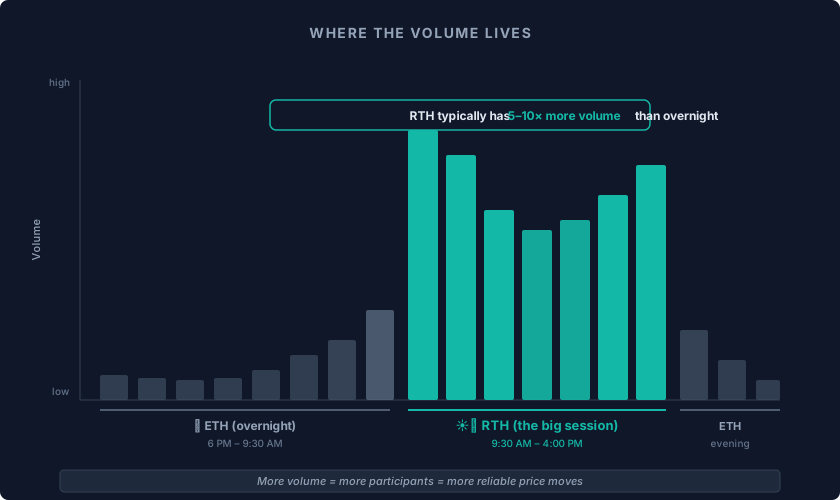
RTHDefinitionRegular Trading Hours — 9:30 AM to 4:00 PM ET. Where 80-90% of daily futures volume happens. The main session traders focus on. is where 80 to 90 percent of the daily volume happens. When volume is high:
- Spreads are tight (the gap between buying and selling prices is small)
- Fills are fast and reliable
- Moves have meaning — lots of participants are voting with real money
During ETHDefinitionExtended Trading Hours — overnight and premarket sessions outside RTH. Market is open but volume is thin and moves can be erratic.:
- Volume is thin (sometimes one-tenth of RTHDefinitionRegular Trading Hours — 9:30 AM to 4:00 PM ET. Where 80-90% of daily futures volume happens. The main session traders focus on.)
- A single large order can move price further than it should
- Big moves can reverse just as fast because no one was really defending the level
What This Means for Beginners
If you are just starting out:
- Trade RTHDefinitionRegular Trading Hours — 9:30 AM to 4:00 PM ET. Where 80-90% of daily futures volume happens. The main session traders focus on. — the signals are cleaner, the setups are more reliable, the ride is less wild
- Watch the overnight session but do not trade it. It tells you where price has been and where key levels sit
- Respect the open — the first 30 to 60 minutes of RTHDefinitionRegular Trading Hours — 9:30 AM to 4:00 PM ET. Where 80-90% of daily futures volume happens. The main session traders focus on. is where the day's tone gets set
The overnight session is where you do your homework. RTHDefinitionRegular Trading Hours — 9:30 AM to 4:00 PM ET. Where 80-90% of daily futures volume happens. The main session traders focus on. is where you take the test.
The Most Important Hour of the Day
The first hour of RTHDefinitionRegular Trading Hours — 9:30 AM to 4:00 PM ET. Where 80-90% of daily futures volume happens. The main session traders focus on. — 9:30 AM to 10:30 AM — is called the Initial BalanceDefinitionThe price range of the first hour (A + B periods). Narrow IB = trend day. Wide IB = range day.. It is so important that we have a whole lesson on it later in this track.
For now, just know this: the first hour of trading sets the tone for the whole day. Pay attention to it, even if you are not ready to trade it.
Common Mistakes
- Trading the overnight session because "the market is open" — the market is open but the good setups are not happening
- Assuming weekends do not matter — news over the weekend can cause a big gap when Sunday evening opens. Always check what happened
- Trading through the 5 PM daily close — during that hour of maintenance, data can be incomplete or charts can look strange
- Holding overnight trades as a beginner — unless your strategy is specifically designed for it, close positions before RTHDefinitionRegular Trading Hours — 9:30 AM to 4:00 PM ET. Where 80-90% of daily futures volume happens. The main session traders focus on. ends