
Premarket High and Premarket Low
Before the regular trading day even begins, the market is already moving.
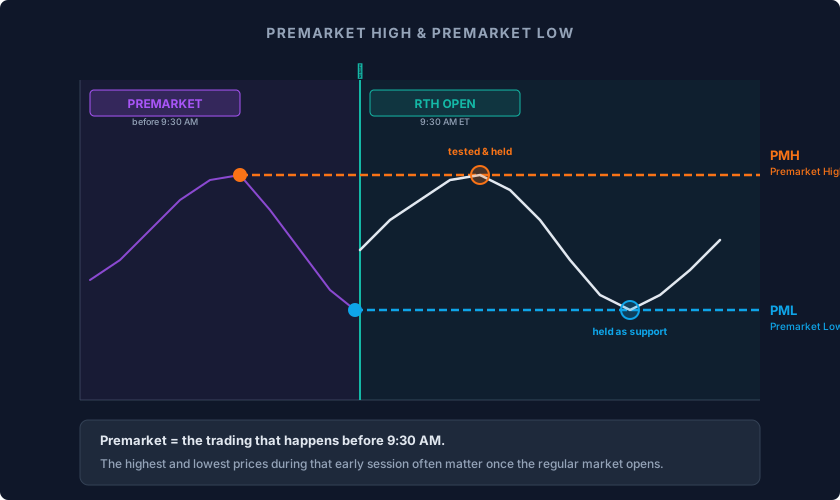
The premarketDefinitionTrading before the 9:30 AM ET open. Light volume, but the highs and lows established here often matter once RTH begins. is the trading that happens before 9:30 AM ET. Volume is light, but the prices established during those hours often matter once the regular session starts.
The two most-watched premarketDefinitionTrading before the 9:30 AM ET open. Light volume, but the highs and lows established here often matter once RTH begins. levels are:
- PremarketDefinitionTrading before the 9:30 AM ET open. Light volume, but the highs and lows established here often matter once RTH begins. High (PMHDefinitionPremarket High — the highest price during premarket trading before 9:30 AM ET.) — the highest price reached before 9:30 AM
- PremarketDefinitionTrading before the 9:30 AM ET open. Light volume, but the highs and lows established here often matter once RTH begins. Low (PMLDefinitionPremarket Low — the lowest price during premarket trading before 9:30 AM ET.) — the lowest price reached before 9:30 AM
What Is the Premarket?
Technically the futures market runs almost 24 hours, so there is no "closed premarketDefinitionTrading before the 9:30 AM ET open. Light volume, but the highs and lows established here often matter once RTH begins." like there is for stocks. But when traders say "premarket" in the context of futures, they usually mean:
- The early morning session from 4:00 AM ET to 9:30 AM ET
- The hours right before the RTHDefinitionRegular Trading Hours — 9:30 AM to 4:00 PM ET. Where 80-90% of daily futures volume happens. The main session traders focus on. open when the first real positioning of the day happens
Earlier overnight hours (10 PM to 3 AM ET, for example) are often too quiet to draw meaningful levels from. The "premarketDefinitionTrading before the 9:30 AM ET open. Light volume, but the highs and lows established here often matter once RTH begins." window is when European traders, news releases, and early U.S. activity start pushing price around.
Why These Levels Matter
When 9:30 AM rolls around and the bell rings, a flood of new volume hits the market. These are the traders who were not active overnight — institutions, retail traders, algorithms that only fire during RTHDefinitionRegular Trading Hours — 9:30 AM to 4:00 PM ET. Where 80-90% of daily futures volume happens. The main session traders focus on..
All of those participants look at the premarketDefinitionTrading before the 9:30 AM ET open. Light volume, but the highs and lows established here often matter once RTH begins. range and askDefinitionThe lowest price someone is currently willing to sell at. If you buy at market, this is what you pay. one simple question:
Is price going to respect what the morning established — or break it?
PMHDefinitionPremarket High — the highest price during premarket trading before 9:30 AM ET. and PMLDefinitionPremarket Low — the lowest price during premarket trading before 9:30 AM ET. are the fences around that premarketDefinitionTrading before the 9:30 AM ET open. Light volume, but the highs and lows established here often matter once RTH begins. range. They become the first real tests of the day.
Common Scenarios After the Open
1. RTH opens inside the premarket range
The most common scenario. The market opens somewhere between PMHDefinitionPremarket High — the highest price during premarket trading before 9:30 AM ET. and PMLDefinitionPremarket Low — the lowest price during premarket trading before 9:30 AM ET., and those two levels act as the day's early ceiling and floor. Watch for:
- Price testing PMHDefinitionPremarket High — the highest price during premarket trading before 9:30 AM ET. → rejection = bearish tell for the morning
- Price testing PMLDefinitionPremarket Low — the lowest price during premarket trading before 9:30 AM ET. → bounce = bullish tell for the morning
- Clean break of either = the trend for the session may be forming
2. RTH opens above PMH (or below PML)
Price gapped above the premarketDefinitionTrading before the 9:30 AM ET open. Light volume, but the highs and lows established here often matter once RTH begins. range at the bell. Now the question is: does it hold the gap, or does it fall back?
- If it holds → PMHDefinitionPremarket High — the highest price during premarket trading before 9:30 AM ET. may now act as support on any pullback
- If it fails and falls back below PMHDefinitionPremarket High — the highest price during premarket trading before 9:30 AM ET. → that is a classic trap move, often leading to downside
The same logic works in reverse for an open below PMLDefinitionPremarket Low — the lowest price during premarket trading before 9:30 AM ET..
3. RTH opens and reverses through the range
Price opens, moves one direction, then reverses and takes out the opposite side of the premarketDefinitionTrading before the 9:30 AM ET open. Light volume, but the highs and lows established here often matter once RTH begins. range. These are often the biggest trend days — a full sweep of one extreme followed by a full sweep of the other.
How to Use PMH and PML
- Mark them before 9:30 AM — look at the premarketDefinitionTrading before the 9:30 AM ET open. Light volume, but the highs and lows established here often matter once RTH begins. range that built up from 4 AM to 9:30 AM and draw lines at the extremes
- Compare them to yesterday's levels — if PMHDefinitionPremarket High — the highest price during premarket trading before 9:30 AM ET. is close to PDHDefinitionPrior Day High — the highest price from yesterday's RTH session. A key level every trader watches., you have a stacked level (more important). If they disagree, the market is searching for direction
- Watch the first 30 minutes of RTHDefinitionRegular Trading Hours — 9:30 AM to 4:00 PM ET. Where 80-90% of daily futures volume happens. The main session traders focus on. — this is when PMHDefinitionPremarket High — the highest price during premarket trading before 9:30 AM ET. and PMLDefinitionPremarket Low — the lowest price during premarket trading before 9:30 AM ET. get tested hardest
- Combine with PDHDefinitionPrior Day High — the highest price from yesterday's RTH session. A key level every trader watches./PDLDefinitionPrior Day Low — the lowest price from yesterday's RTH session. A key level every trader watches. and IB levels — no single level tells the story, but stacked levels tell a loud one
A Note on Caveats
PMHDefinitionPremarket High — the highest price during premarket trading before 9:30 AM ET. and PMLDefinitionPremarket Low — the lowest price during premarket trading before 9:30 AM ET. are less "heavy" than PDHDefinitionPrior Day High — the highest price from yesterday's RTH session. A key level every trader watches. and PDLDefinitionPrior Day Low — the lowest price from yesterday's RTH session. A key level every trader watches.. They form on lower volume, which means fewer traders were defending them. A PDH built on huge RTHDefinitionRegular Trading Hours — 9:30 AM to 4:00 PM ET. Where 80-90% of daily futures volume happens. The main session traders focus on. volume is a much stronger level than a PMH built on thin overnight trade.
That said: even a "light" level is still a level. Price still often reacts there. Just do not treat PMHDefinitionPremarket High — the highest price during premarket trading before 9:30 AM ET. and PMLDefinitionPremarket Low — the lowest price during premarket trading before 9:30 AM ET. as the strongest wall on your chart — treat them as the first wall of the day.
Common Mistakes
- Confusing premarketDefinitionTrading before the 9:30 AM ET open. Light volume, but the highs and lows established here often matter once RTH begins. high with overnight high — these can be different prices. PMHDefinitionPremarket High — the highest price during premarket trading before 9:30 AM ET. is specifically the 4:00–9:30 AM window
- Treating PMHDefinitionPremarket High — the highest price during premarket trading before 9:30 AM ET. like PDHDefinitionPrior Day High — the highest price from yesterday's RTH session. A key level every trader watches. in weight — PDH is usually more important because it was made in full RTHDefinitionRegular Trading Hours — 9:30 AM to 4:00 PM ET. Where 80-90% of daily futures volume happens. The main session traders focus on. volume
- Ignoring premarketDefinitionTrading before the 9:30 AM ET open. Light volume, but the highs and lows established here often matter once RTH begins. news — a big headline at 7 AM can push PMHDefinitionPremarket High — the highest price during premarket trading before 9:30 AM ET. in ways that do not reflect normal positioning. Know why the level is there
- Not updating your chart at the open — draw PMHDefinitionPremarket High — the highest price during premarket trading before 9:30 AM ET. and PMLDefinitionPremarket Low — the lowest price during premarket trading before 9:30 AM ET. before 9:30 AM and keep them on your chart all day