
How Structure Connects to Everything Else
Market structure is not a trading system by itself. It is the foundation that everything else is built on.
How structure connects with other tools:
- Order Flow — use structure to identify the direction and key levels, then use the footprint chartDefinitionA chart showing bid and ask volume at every price inside each candle. Reveals who is buying and selling. to confirm institutional flow supports the thesis. Stacked imbalancesDefinition3+ consecutive price levels where one side overwhelms the other by 3:1. Marks institutional zones. at a structural support level? That is confluence
- Measured MovesDefinitionA price projection where Leg B equals Leg A. Halsey's primary target is the -23.6% extension beyond 100%. — after a BOSDefinitionBreak of Structure — confirms a trend change. Price breaks the next swing point after CHoCH. confirms a new trend, the 50% and 61.8% retracement levels of the impulse legDefinitionA sharp, fast move that establishes the trend direction. The big candles. Don't chase these — wait for the pullback. are where the correction is most likely to find support or resistance
- SqueezeDefinitionLow volatility compression — bands tighten. When it releases, expect an explosive move. — when price pulls back to a structural level and starts squeezing (volatility compresses, bands tighten), the market is coiling for the next impulse legDefinitionA sharp, fast move that establishes the trend direction. The big candles. Don't chase these — wait for the pullback.. A squeeze at a key structural level is one of the highest probability continuation signals
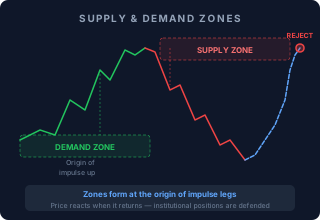
- Supply and Demand ZonesDefinitionA price area where buyers previously overwhelmed sellers. Expect buying when price returns here. — after a BOSDefinitionBreak of Structure — confirms a trend change. Price breaks the next swing point after CHoCH. or CHoCHDefinitionChange of Character — the first warning a trend may be ending. Price breaks a swing point in the opposite direction. fires, the origin of the impulse legDefinitionA sharp, fast move that establishes the trend direction. The big candles. Don't chase these — wait for the pullback. creates a supply or demand zone. When price returns to the zone, expect a reaction — especially when it aligns with the higher timeframeDefinitionThe longest timeframe in a multi-timeframe stack — typically daily or 4-hour. Determines overall bias. structure
Key Takeaways
Market structure is the foundation of every trade. Learn to identify swing highsDefinitionA peak on the chart where price reversed lower. Marks where sellers previously overpowered buyers. and lows, read the trend through higher highs and higher lows or lower highs and lower lows, spot CHoCHDefinitionChange of Character — the first warning a trend may be ending. Price breaks a swing point in the opposite direction. as the early warning and BOSDefinitionBreak of Structure — confirms a trend change. Price breaks the next swing point after CHoCH. as the confirmation, and always let the higher timeframeDefinitionThe longest timeframe in a multi-timeframe stack — typically daily or 4-hour. Determines overall bias. guide your bias.
Without structure, you are guessing. With structure, you have a framework that tells you the direction, the key levels, and when the trend has changed. Everything else — order flow, measured movesDefinitionA price projection where Leg B equals Leg A. Halsey's primary target is the -23.6% extension beyond 100%., squeezeDefinitionLow volatility compression — bands tighten. When it releases, expect an explosive move. signals — is layered on top of this foundation.
Master structure first. Everything else becomes easier once you can read the market's backbone.