
Bullish Structure: Higher Highs and Higher Lows
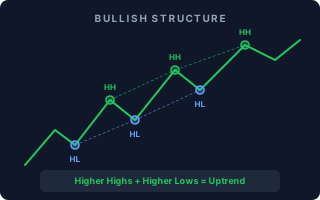
An uptrend is defined by a series of higher highs and higher lows. Each swing highDefinitionA peak on the chart where price reversed lower. Marks where sellers previously overpowered buyers. is higher than the previous swing high, and each swing lowDefinitionA trough on the chart where price reversed higher. Marks where buyers previously overpowered sellers. is higher than the previous swing low.
This tells you that buyers are consistently stronger than sellers. Every time sellers push price down, buyers step in at a higher level than last time. Every time buyers push price up, they exceed the prior high.
How to identify bullish structure:
- Start from the left side of the chart and trace the swing points
- If each successive swing lowDefinitionA trough on the chart where price reversed higher. Marks where buyers previously overpowered sellers. is higher than the last, and each successive swing highDefinitionA peak on the chart where price reversed lower. Marks where sellers previously overpowered buyers. is higher than the last, you are in a bullish structure
- Your bias should be long — look for entries on pullbacks to swing lowsDefinitionA trough on the chart where price reversed higher. Marks where buyers previously overpowered sellers. or key support levels
- Every dip is a buying opportunity, not a reason to short
- The most common mistake retail traders make is trying to pick the top
- Until structure tells you the trend has changed, your job is to buy pullbacks
Bearish Structure: Lower Highs and Lower Lows
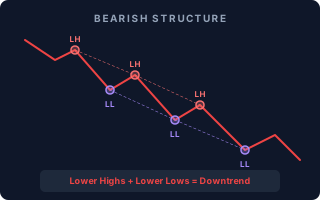
A downtrend is defined by a series of lower highs and lower lows. Each swing highDefinitionA peak on the chart where price reversed lower. Marks where sellers previously overpowered buyers. is lower than the previous swing high, and each swing lowDefinitionA trough on the chart where price reversed higher. Marks where buyers previously overpowered sellers. is lower than the previous swing low.
This tells you that sellers are in control. Every bounce is sold at a lower level than the last. Every push lower exceeds the prior low.
How to identify bearish structure:
- Trace the swing points from left to right
- If each successive swing highDefinitionA peak on the chart where price reversed lower. Marks where sellers previously overpowered buyers. is lower than the last, and each successive swing lowDefinitionA trough on the chart where price reversed higher. Marks where buyers previously overpowered sellers. is lower than the last, you are in a bearish structure
- Your bias should be short — look for entries on rallies into swing highsDefinitionA peak on the chart where price reversed lower. Marks where sellers previously overpowered buyers. or key resistance levels
In a bearish trend, every rally is a selling opportunity. Do not try to catch the bottom. Wait for structure to shift before flipping your bias.
Ranging Structure: Equal Highs and Equal Lows
Sometimes the market is not trending in either direction. Price bounces between a defined high and low, creating roughly equal highs and equal lows. This is a range.
Ranges are where most retail traders get chopped up. They buy the breakout above resistance, get stopped out when it fails. They short the breakdown below support, get stopped out when it reverses. The market is not ready to trend, and forcing a directional bias in a range is a losing strategy.
How to trade a range:
- Buy at range support with a stop below
- Sell at range resistance with a stop above
- Avoid the middle of the range — that is no-man's land where there is no edge