
What Is Liquidity?
In ICT terminology, liquidityDefinitionResting orders (stop losses, limit orders) at known levels. Institutions need liquidity to fill large positions. refers to resting ordersDefinitionA limit order sitting on the DOM, waiting to be hit. The collection of resting orders is the order book. in the market — specifically, stop losses and limit orders sitting at known price levels. These resting orders are what institutional traders need to fill their positions.
There are two types of liquidityDefinitionResting orders (stop losses, limit orders) at known levels. Institutions need liquidity to fill large positions.:
Two types of liquidityDefinitionResting orders (stop losses, limit orders) at known levels. Institutions need liquidity to fill large positions.:
- Buy-Side LiquidityDefinitionStop losses from shorts sitting above equal highs. Institutions sweep these to fill sell orders. (BSL) — sits above price action. Stop losses from short sellers and buy stop orders from breakout traders. When price sweeps above a swing highDefinitionA peak on the chart where price reversed lower. Marks where sellers previously overpowered buyers., it triggers these orders, providing the liquidity institutions need to sell into
- Sell-Side LiquidityDefinitionStop losses from longs sitting below equal lows. Institutions sweep these to fill buy orders. (SSL) — sits below price action. Stop losses from long buyers and sell stop orders. When price sweeps below a swing lowDefinitionA trough on the chart where price reversed higher. Marks where buyers previously overpowered sellers., it triggers these orders, providing the liquidity institutions need to buy into
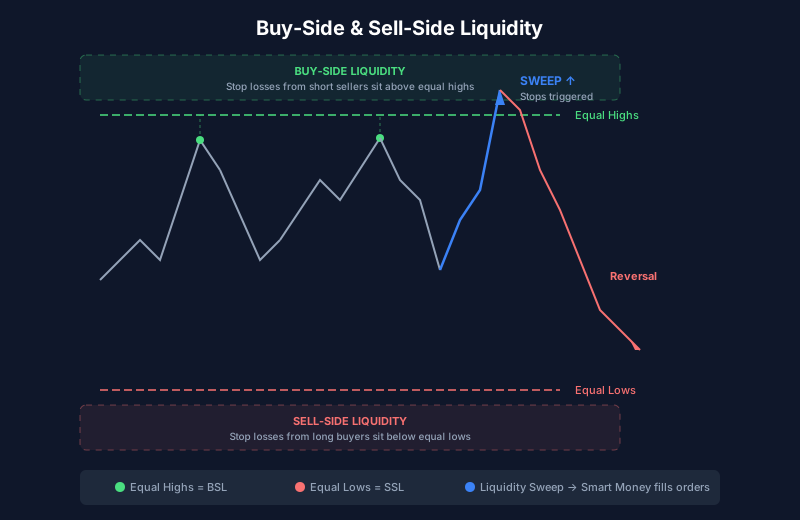
LiquidityDefinitionResting orders (stop losses, limit orders) at known levels. Institutions need liquidity to fill large positions. is the fuel that moves markets. Without it, institutions cannot fill their orders. Understanding where liquidity sits tells you where price is likely to go next.
Equal Highs and Equal Lows
The easiest liquidityDefinitionResting orders (stop losses, limit orders) at known levels. Institutions need liquidity to fill large positions. pools to spot are equal highs and equal lows. When price makes two or more swing highsDefinitionA peak on the chart where price reversed lower. Marks where sellers previously overpowered buyers. at nearly the same level, every technical analysis textbook calls that "resistance." In reality, it is a pool of buy stops sitting just above those highs.
The same applies in reverse: equal lows create a pool of sell stops just below. These are the most obvious targets for liquidity sweepsDefinitionPrice pushes beyond a key level to trigger stops, then reverses. The signature of institutional activity..
Liquidity Sweeps
A liquidity sweepDefinitionPrice pushes beyond a key level to trigger stops, then reverses. The signature of institutional activity. occurs when price briefly pushes beyond a key level — taking out stops — then reverses. This is the signature of institutional activity. The sweep accomplishes two things:
- It triggers stop losses, creating a burst of market orders
- Institutions use those market orders as the other side of their trade
A sweep of sell-side liquidityDefinitionStop losses from longs sitting below equal lows. Institutions sweep these to fill buy orders. often marks the low of a move. A sweep of buy-side liquidityDefinitionStop losses from shorts sitting above equal highs. Institutions sweep these to fill sell orders. often marks the high. This is why "stop hunts" happen — they are not random. They are deliberate.
Inducement
InducementDefinitionA small liquidity grab that lures traders in before the real sweep. The bait before the trap. is a smaller liquidityDefinitionResting orders (stop losses, limit orders) at known levels. Institutions need liquidity to fill large positions. grab that lures retail traders into positions before the real sweep happens. For example, price may break a minor swing lowDefinitionA trough on the chart where price reversed higher. Marks where buyers previously overpowered sellers. (inducing shorts) before sweeping the major swing low and reversing hard.
Think of inducementDefinitionA small liquidity grab that lures traders in before the real sweep. The bait before the trap. as the bait. It creates a false sense of confirmation that traps traders on the wrong side, building even more liquidityDefinitionResting orders (stop losses, limit orders) at known levels. Institutions need liquidity to fill large positions. for the real move.
How to Trade Liquidity
The key is to stop trading AT liquidityDefinitionResting orders (stop losses, limit orders) at known levels. Institutions need liquidity to fill large positions. levels and start anticipating sweeps:
- Mark equal highs/lows and obvious swing points — these are targets
- Wait for price to sweep through, triggering the stops
- Look for reversal confirmation after the sweep (order blockDefinitionThe last opposing candle before an impulse move. Where the institutional order that started the move originated. reaction, absorptionDefinitionHeavy aggressive orders hit a level but price doesn't move — a large passive player is absorbing the flow. on the footprint, deltaDefinitionAsk volume minus bid volume. Positive = more buying. Negative = more selling. Shows who is more aggressive. divergence)
- Enter in the opposite direction of the sweep
Do not buy breakouts above equal highs. Do not sell breakdowns below equal lows. Let the sweep happen first. Then trade with Smart MoneyDefinitionInstitutional traders — banks, hedge funds, market makers — with the capital to move markets..