
What Is an Order Block?
An order blockDefinitionThe last opposing candle before an impulse move. Where the institutional order that started the move originated. is the last opposing candle before a strong impulse move. It marks the price zone where institutional orders originated — where Smart MoneyDefinitionInstitutional traders — banks, hedge funds, market makers — with the capital to move markets. committed capital to initiate a directional move.
- Bullish Order BlockDefinitionThe last opposing candle before an impulse move. Where the institutional order that started the move originated. — the last bearish (down) candle before a sharp rally. This is where institutions placed large buy orders. When price returns to this zone, those unfilled buy orders may still be sitting there, providing support
- Bearish Order BlockDefinitionThe last opposing candle before an impulse move. Where the institutional order that started the move originated. — the last bullish (up) candle before a sharp sell-off. This is where institutions placed large sell orders. When price returns to this zone, expect selling pressure
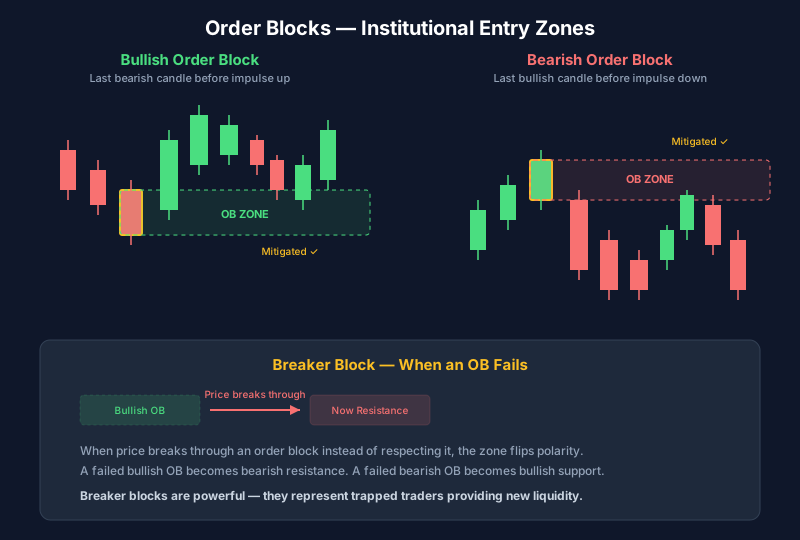
An order blockDefinitionThe last opposing candle before an impulse move. Where the institutional order that started the move originated. is not just a candle — it is a zone. Use the full range of the candle (open to close, or high to low for wicks) as your zone of interest.
How to Identify Valid Order Blocks
Not every candle before a move is an order blockDefinitionThe last opposing candle before an impulse move. Where the institutional order that started the move originated.. Valid order blocks have specific characteristics:
- Strong displacementDefinitionA strong impulsive move with large candles. Creates FVGs and confirms Smart Money is active. follows: The move away from the OB must be impulsive — large candles, strong deltaDefinitionAsk volume minus bid volume. Positive = more buying. Negative = more selling. Shows who is more aggressive., clear directional commitment
- Creates a structural break: The impulse after the OB should break a previous swing highDefinitionA peak on the chart where price reversed lower. Marks where sellers previously overpowered buyers. (bullish) or swing lowDefinitionA trough on the chart where price reversed higher. Marks where buyers previously overpowered sellers. (bearish)
- Has not been mitigated: Once price returns to the OB and reacts, it has been "used up" — do not expect it to hold again
Mitigation
When price returns to an order blockDefinitionThe last opposing candle before an impulse move. Where the institutional order that started the move originated. and reacts (bounces for bullish, rejects for bearish), the OB has been mitigated. This means the unfilled orders have been filled. A mitigated order block loses its significance — do not expect it to hold a second time.
What Is a Breaker Block?
A breaker blockDefinitionA failed order block that flips from support to resistance (or vice versa). Key level for retest entries. is a failed order blockDefinitionThe last opposing candle before an impulse move. Where the institutional order that started the move originated.. When price breaks through an order block instead of respecting it, the zone flips polarity:
- A failed bullish OB becomes bearish resistance (a bearish breaker)
- A failed bearish OB becomes bullish support (a bullish breaker)
Breaker blocksDefinitionA failed order block that flips from support to resistance (or vice versa). Key level for retest entries. are powerful because they represent trapped tradersDefinitionRetail traders who chase a breakout just before it fails. The forced unwind of their stops fuels the reversal — one of the most reliable intraday patterns.. Everyone who bought at the bullish OB is now underwater. When price returns to that level, those trapped longs will sell to cut losses — providing fuel for the continuation.
Trading Order Blocks
- Identify the order blockDefinitionThe last opposing candle before an impulse move. Where the institutional order that started the move originated. (last opposing candle before displacementDefinitionA strong impulsive move with large candles. Creates FVGs and confirms Smart Money is active.)
- Wait for price to retrace back to the OB zone
- Check your footprint: look for absorptionDefinitionHeavy aggressive orders hit a level but price doesn't move — a large passive player is absorbing the flow., imbalancesDefinitionA price level where one side overwhelms the other by 3:1 or more. Shows where big players committed., or deltaDefinitionAsk volume minus bid volume. Positive = more buying. Negative = more selling. Shows who is more aggressive. shift at the OB level
- Enter when you see confirmation that the zone is holding
- Place your stop just beyond the OB zone (beyond the wick)
The best order blocksDefinitionThe last opposing candle before an impulse move. Where the institutional order that started the move originated. form during killzonesDefinitionTime windows when institutions are most active: London Open (2-5am ET), NY Open (7-10am ET). and are followed by strong displacementDefinitionA strong impulsive move with large candles. Creates FVGs and confirms Smart Money is active. with fair value gapsDefinitionA three-candle pattern where the wick of Candle 1 doesn't overlap with the wick of Candle 3, leaving a gap where only Candle 2 traded. Price tends to revisit.. When an OB, FVGDefinitionFair Value Gap — a three-candle pattern where the wick of Candle 1 doesn't overlap with the wick of Candle 3. Price tends to return to fill these gaps., and liquidity sweepDefinitionPrice pushes beyond a key level to trigger stops, then reverses. The signature of institutional activity. all align, you have a confluence entry — the highest probability setup in ICT methodology.
Our Market Structure Indicator for NinjaTrader automatically identifies and plots order blocksDefinitionThe last opposing candle before an impulse move. Where the institutional order that started the move originated. and breaker blocksDefinitionA failed order block that flips from support to resistance (or vice versa). Key level for retest entries. on your chart. It marks bullish and bearish OBs in real-time and tracks when they get mitigated — so you always know which zones are still live.