
What Is Gamma Exposure?
Gamma Exposure — GEX — is an estimate of how much index the big options dealers are forced to buy or sell as price moves, just to keep their own books hedged. It is not a prediction of direction. It is a map of where mechanical, forced order flow tends to build up — and near the biggest levels that flow is large enough to bend the S&P 500DefinitionIndex of the 500 biggest U.S. companies — Apple, Microsoft, Amazon, etc. Traded as ES futures (or MES for the micro). and Nasdaq 100DefinitionIndex of the 100 biggest tech-heavy companies — Apple, Microsoft, Google, Nvidia. Traded as NQ futures (or MNQ for the micro). intraday.
If you trade ESDefinitionE-mini S&P 500 futures contract. Tracks the S&P 500 index. 1 tick = $12.50, 1 point = $50. Most heavily traded index future. or NQDefinitionE-mini Nasdaq 100 futures contract. Known for fast, volatile moves. 1 tick = $5, 1 point = $20. and you have ever watched price get pinned to a level all day, or seen a quiet market suddenly go vertical, GEX is often part of the reason underneath it.
A 60-second options refresher
You do not need to trade options to use GEX, but two words matter:
- Delta is how much an option acts like the underlying right now. Whoever is on the other side of that option offsets it by trading deltaDefinitionAsk volume minus bid volume. Positive = more buying. Negative = more selling. Shows who is more aggressive.'s worth of the index.
- Gamma is how fast that deltaDefinitionAsk volume minus bid volume. Positive = more buying. Negative = more selling. Shows who is more aggressive. changes as price moves. High gamma means the required hedge flips quickly with even a small move.
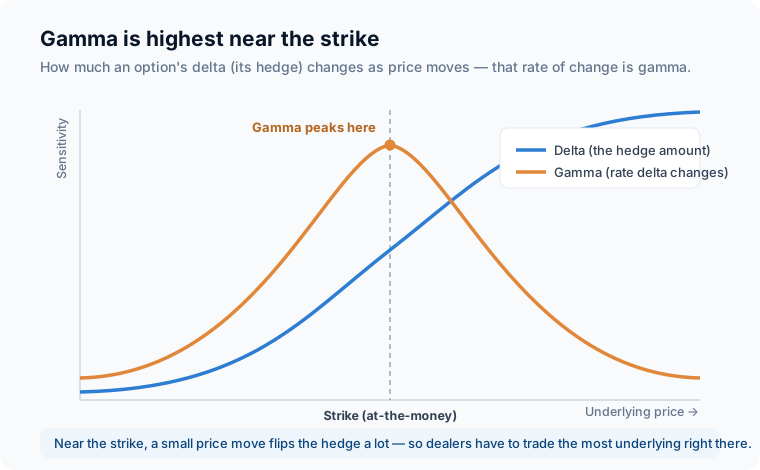
Gamma is highest right around the strike price. So near a strike with a lot of open contracts, a small move forces a big change in how much index the dealer must hold — and that is exactly where their hedging trades get large.
Why dealers are forced to trade
Market makers ("dealers") sit on the other side of the options everyone else buys and sells. They are not trying to bet on direction — they want to stay neutral. So every time price moves and their deltaDefinitionAsk volume minus bid volume. Positive = more buying. Negative = more selling. Shows who is more aggressive. drifts, they trade the underlying to get back to flat.
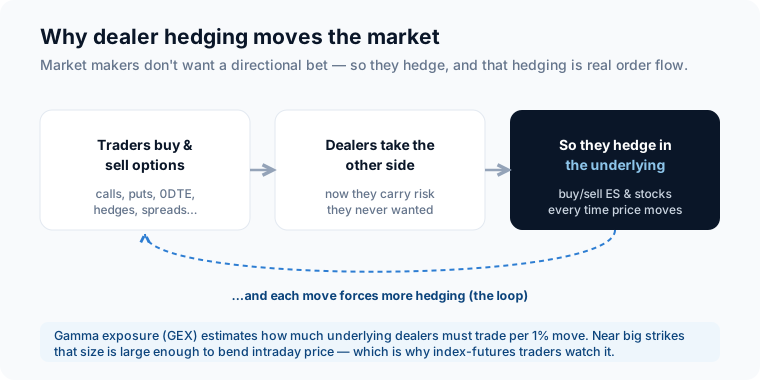
That hedging is not optional and it is not emotional — it is mechanical. GEX simply adds it all up: the dollar amount of index dealers must trade for each 1% move. The bigger that number near current price, the more their hedging can shape the tapeDefinitionTrader slang for time and sales — the running stream of executed trades. 'Reading the tape' = inferring direction from prints..
GEX does not tell you what dealers *want* to happen. It tells you what they are *forced to do* if price moves — and forced flow is the most predictable flow there is.
Why an index-futures trader should care
Because ESDefinitionE-mini S&P 500 futures contract. Tracks the S&P 500 index. 1 tick = $12.50, 1 point = $50. Most heavily traded index future. tracks the S&P 500DefinitionIndex of the 500 biggest U.S. companies — Apple, Microsoft, Amazon, etc. Traded as ES futures (or MES for the micro). and NQDefinitionE-mini Nasdaq 100 futures contract. Known for fast, volatile moves. 1 tick = $5, 1 point = $20. tracks the Nasdaq 100DefinitionIndex of the 100 biggest tech-heavy companies — Apple, Microsoft, Google, Nvidia. Traded as NQ futures (or MNQ for the micro)., the hedging dealers do in those index options shows up directly in the futures you trade. Over the next lessons you will learn the three things GEX gives you:
- Which regime you are in — calm or volatile (positive vs negative gamma)
- The flip level where that regime changes
- The walls that tend to act as support and resistance
Learn those three and a lot of otherwise-confusing days start to make sense.