
The line between calm and chaos
The gamma flip — also called the zero-gamma level — is the price where dealers' total gamma crosses zero. It is the single most useful line GEX gives you, because it separates the two regimes from the last lesson.
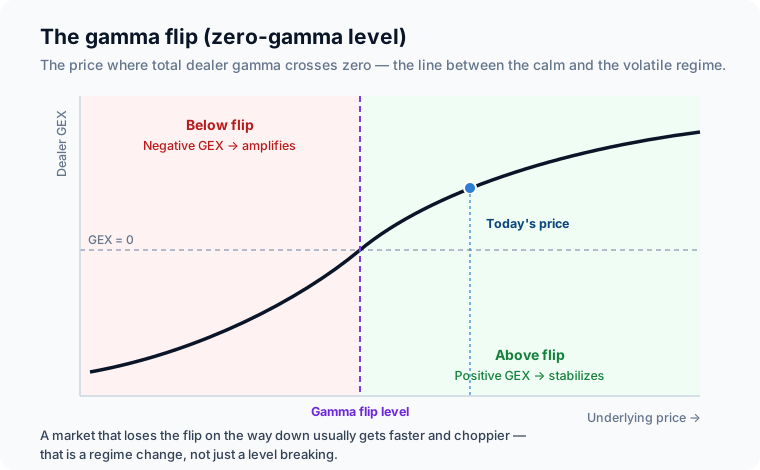
- Above the flip: dealers are net long gamma → hedging dampens moves → calmer, range-bound, mean-reverting.
- Below the flip: dealers are net short gamma → hedging amplifies moves → faster, trending, more volatile.
Why it matters more than a normal level
A regular support level breaking is just a level breaking. The flip breaking is a change in the market's character. When price loses the flip on the way down, the same dealer hedging that had been buying dips flips to selling them — which is why markets so often get faster and choppier *below* the flip, and calm back down when they reclaim it.
That is the tradeable idea: do not just watch *whether* the flip breaks — watch what the tapeDefinitionTrader slang for time and sales — the running stream of executed trades. 'Reading the tape' = inferring direction from prints. does *after*, because the whole environment changes.
Where the number comes from
You do not have to calculate it, but it helps to know it is real math, not a vibe. Data providers:
- Take every listed strike and expiration on the index,
- Estimate each one's gamma and how dealers are positioned,
- Add it all up as a running total across price, and
- Find the price where that total equals zero.
That crossing point is the flip. Because positioning changes as traders open and close options, the flip moves — sometimes day to day, sometimes intraday. Always use today's level, not yesterday's.
Think of the flip as sea level. Above it you can wade around safely. Below it the current takes over — and it can pull hard.