
From index options to your ES chart
GEX is calculated from index options — mostly S&P 500DefinitionIndex of the 500 biggest U.S. companies — Apple, Microsoft, Amazon, etc. Traded as ES futures (or MES for the micro). (SPX/SPY) and Nasdaq 100DefinitionIndex of the 100 biggest tech-heavy companies — Apple, Microsoft, Google, Nvidia. Traded as NQ futures (or MNQ for the micro). (NDX/QQQ). The levels come out in index points, and you map them onto the future you trade:
- S&P 500DefinitionIndex of the 500 biggest U.S. companies — Apple, Microsoft, Amazon, etc. Traded as ES futures (or MES for the micro). levels → trade them on ESDefinitionE-mini S&P 500 futures contract. Tracks the S&P 500 index. 1 tick = $12.50, 1 point = $50. Most heavily traded index future. (or MESDefinitionMicro E-mini S&P 500 — 1/10th the size of ES. 1 tick = $1.25, 1 point = $5. Recommended starter contract for beginners.)
- Nasdaq 100DefinitionIndex of the 100 biggest tech-heavy companies — Apple, Microsoft, Google, Nvidia. Traded as NQ futures (or MNQ for the micro). levels → trade them on NQDefinitionE-mini Nasdaq 100 futures contract. Known for fast, volatile moves. 1 tick = $5, 1 point = $20. (or MNQDefinitionMicro E-mini Nasdaq 100 — 1/10th the size of NQ. 1 tick = $0.50, 1 point = $2. Fast moves, beginner-sized risk.)
Mark the flip, the call wall and the put wall on your chart each morning, the same way you would mark prior-day levels — or let the Market Structure Indicator's GEX (Dealer Positioning) overlay plot them for you and refresh them through the session.
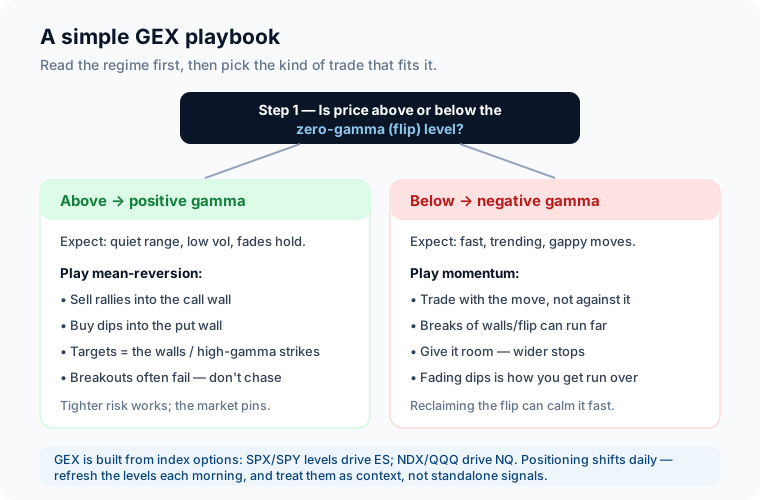
Step 1 — read the regime
Is price above or below the flip?
- Above (positive gamma): expect a quieter, range-bound day. Favor mean-reversion — sell rallies into the call wall, buy dips into the put wall, and be skeptical of breakouts. Tighter risk tends to work because the market pins.
- Below (negative gamma): expect faster, trending, gappier action. Favor momentum — trade with the move, respect breaks of the walls and the flip, and give trades more room. Fading dips here is how you get run over.
Step 2 — trade the levels, not blindly
The walls are context, not entry signals by themselves. They are strongest when they line up with what you already trade — a put wall sitting on the prior-day low, a call wall at a market-structure resistance, an unfilled gap into the flip. Confluence is the edge; the wall alone is not.
A simple morning routine
- Note today's flip / zero-gamma level → decide the regime.
- Mark the call wall and put wall → your range and your targets.
- Above the flip, plan fades at the edges; below it, plan for trends and breaks.
- Re-check midday — positioning (especially same-day 0DTE options) can move these levels intraday.
Honest limitations
- GEX is context, not a crystal ball. It shifts the odds; it does not remove risk.
- Levels move as positioning changes, and 0DTE options can reshape them fast.
- It works best on the big, liquid indices where dealer size actually matters.
- Big scheduled events (FOMC, CPI) can overwhelm positioning entirely.
Use it the way a good trader uses any tool: to know what *kind* of day you are likely in, and to trade the plan that fits it.
This is educational material, not trading advice. Futures trading involves substantial risk of loss and is not suitable for everyone. GEX is one lens on the market — combine it with your own process and risk management.