
The one idea that explains most days
Every trading day, dealer hedging is doing one of two opposite things: calming the market down, or speeding it up. Which one depends on the sign of their net gamma. Get this straight and half of GEX is done.
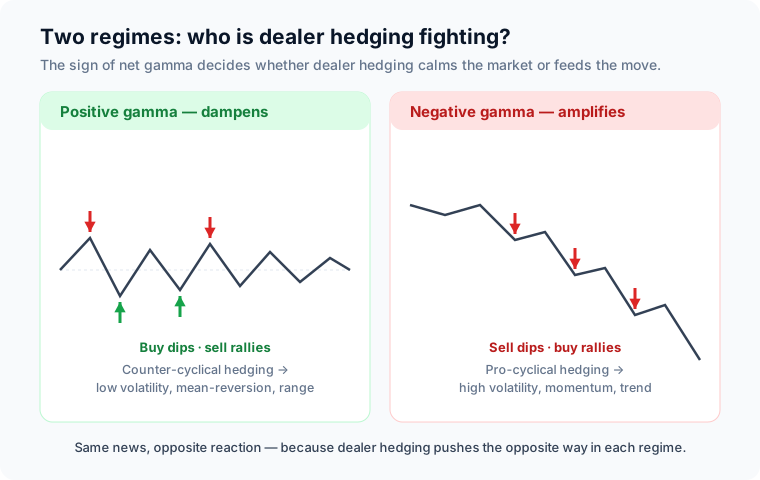
Positive gamma — the market dampens itself
When dealers are net long gamma, their hedge works *against* the move:
- Price dips → they buy to re-hedge → the dip gets bought
- Price rallies → they sell to re-hedge → the rally gets sold
This is counter-cyclical. It quietly leans against every move, so volatility stays low, ranges hold, and price tends to grind and mean-revert. Fades work. Breakouts often fail.
Negative gamma — the market feeds on itself
When dealers are net short gamma, their hedge works *with* the move:
- Price dips → they sell to re-hedge → the dip gets worse
- Price rallies → they buy to re-hedge → the rally accelerates
This is pro-cyclical — a feedback loop. Small moves turn into big ones, volatility expands, and the market trends and gaps. This is the environment behind most fast, one-directional selloffs.
Same headline, opposite reaction. In positive gamma a scary print gets bought back; in negative gamma the same print can start a cascade. The news did not change — the hedging did.
How do you know which one you're in?
You compare price to a single level — the gamma flip. Above it you are usually in positive gamma; below it, negative. That level is the subject of the next lesson.