What is Break of Structure?
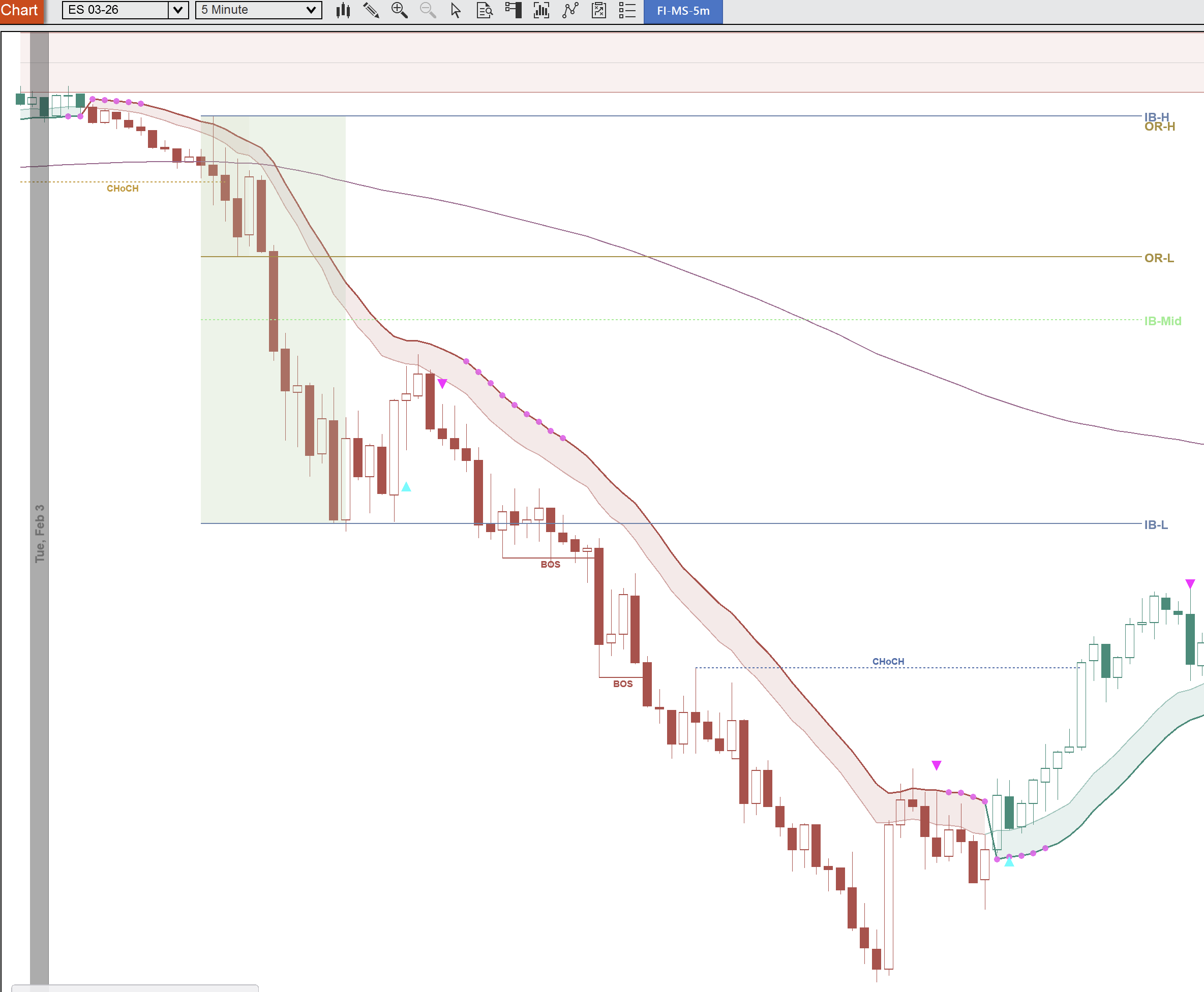
Break of Structure (BOSDefinitionBreak of Structure — price breaks the previous swing point in the trend direction. Confirms continuation.) is a price action concept that signals a shift in market direction. It occurs when price breaks beyond a significant swing highDefinitionA peak on the chart where price reversed lower. Marks where sellers previously overpowered buyers. or swing low, confirming that the prevailing trend has changed.
In simple terms: a bullish BOSDefinitionBreak of Structure — price breaks the previous swing point in the trend direction. Confirms continuation. happens when price breaks above a prior swing highDefinitionA peak on the chart where price reversed lower. Marks where sellers previously overpowered buyers., and a bearish BOS happens when price breaks below a prior swing low.
Why BOS Matters for Futures Traders
Most retail traders get caught trading against the trend because they fail to recognize when structure has shifted. BOSDefinitionBreak of Structure — price breaks the previous swing point in the trend direction. Confirms continuation. gives you an objective signal that the market has changed direction, so you can align your trades with the new trend instead of fighting it.
Key Insight
When you see a BOS on the NQ, ES, or any futures contract, it tells you three things: the prior trend is invalidated, a new directional bias is established, and you should be looking for entries in the direction of the break.
How to Identify BOS on Your Charts
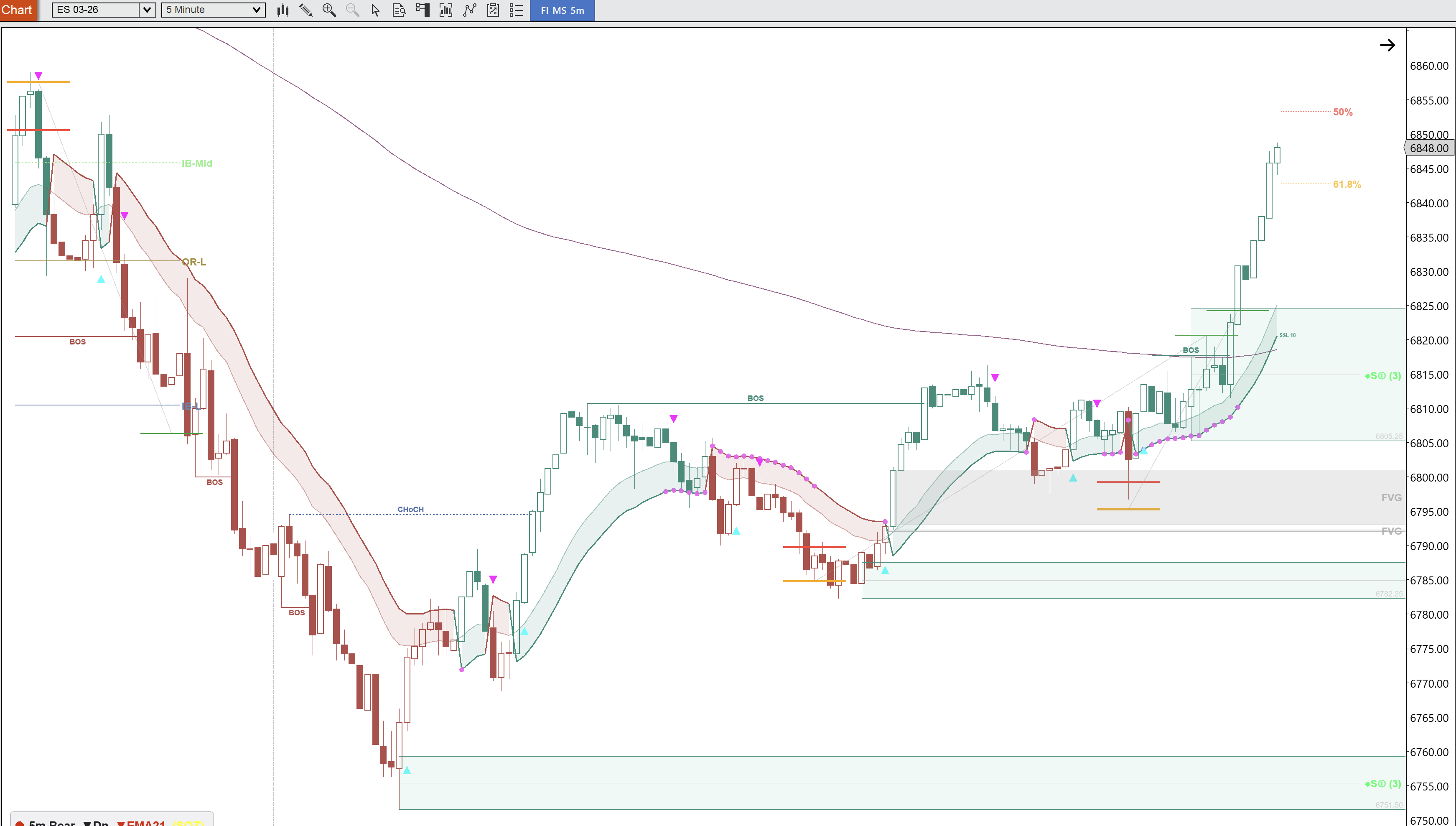
Bullish Break of Structure Look for a series of lower lows and lower highs (a downtrend). When price breaks above the most recent swing high, that is a bullish BOS. The downtrend is over, and you should now be looking for long entries.
Bearish Break of Structure Look for a series of higher highs and higher lows (an uptrend). When price breaks below the most recent swing low, that is a bearish BOS. The uptrend is over, and you should now be looking for short entries.
The Biggest Mistake: Chasing the BOS
Here is where most traders go wrong. They see the break of structure and immediately enter a trade in the direction of the break. The problem? The impulse leg has already fired. You are entering late with a wide stop lossDefinitionAn automatic exit order. If price moves against you to a preset level, the trade closes automatically. Every trade needs one. and terrible risk-to-reward.
Key Insight
Professional traders do not chase. They wait for the retracement. The impulse leg is the signal — the retest is the trade.
The Professional Approach: Trade the Retest
After a BOSDefinitionBreak of Structure — price breaks the previous swing point in the trend direction. Confirms continuation. occurs, price almost always pulls back to retest a key level. This retest is where the real trade is. Here is the process:
Identify the BOSDefinitionBreak of Structure — price breaks the previous swing point in the trend direction. Confirms continuation. on your higher timeframe (1-hour or 4-hour). Wait for price to retrace back to a key level such as a breaker block, order blockDefinitionThe last opposing candle before an impulse move. Where the institutional order originated., or supply/demand zoneDefinitionA price area where buyers previously overwhelmed sellers. Expect buying when price returns here.. Look for confirmation on a lower timeframe (5-minute or 15-minute). Enter with a tight stop lossDefinitionAn automatic exit order. If price moves against you to a preset level, the trade closes automatically. Every trade needs one. and favorable risk-to-reward.
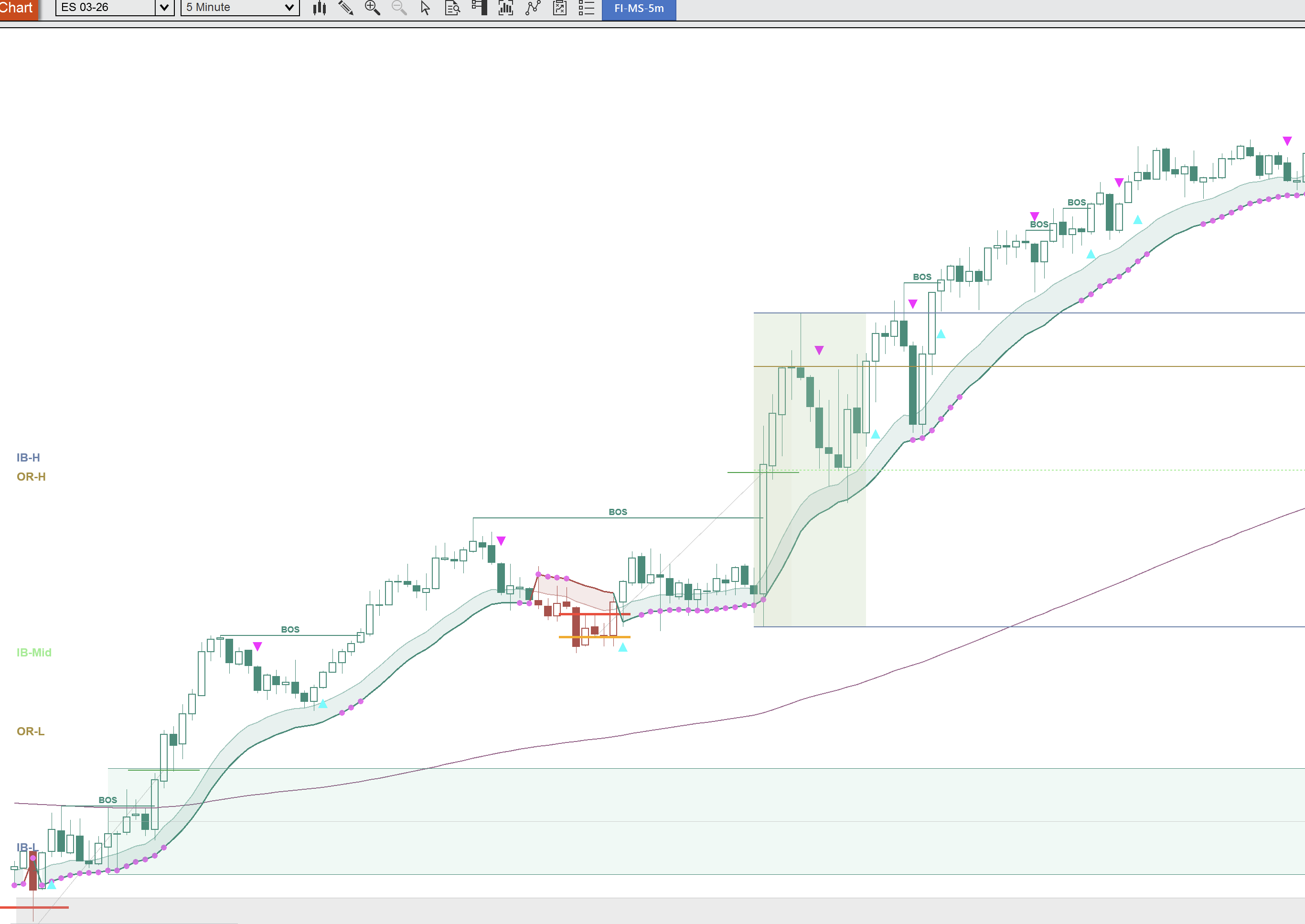
This is the retest trade, and it is how consistent, professional traders operate in the futures markets.
Using Indicators to Automate BOS Detection
Manually scanning for BOSDefinitionBreak of Structure — price breaks the previous swing point in the trend direction. Confirms continuation. across multiple instruments and timeframes is time-consuming and error-prone. This is where a dedicated market structure indicator becomes invaluable.
A good market structure indicator will automatically label every BOSDefinitionBreak of Structure — price breaks the previous swing point in the trend direction. Confirms continuation. on your chart, highlight key support and resistance levels where retests are likely to occur, and fire signals when a high-probability setup aligns.
Key Takeaways
Key Insight
Break of Structure is your first signal that the trend has changed. Never chase the impulse leg — wait for the retest at a key level for a high-probability entry.
Use a market structure indicator to automate detection and save hours of manual chart analysis. The retest trade is where professional futures traders make their money. Structure first, patience second, confirmation third.